

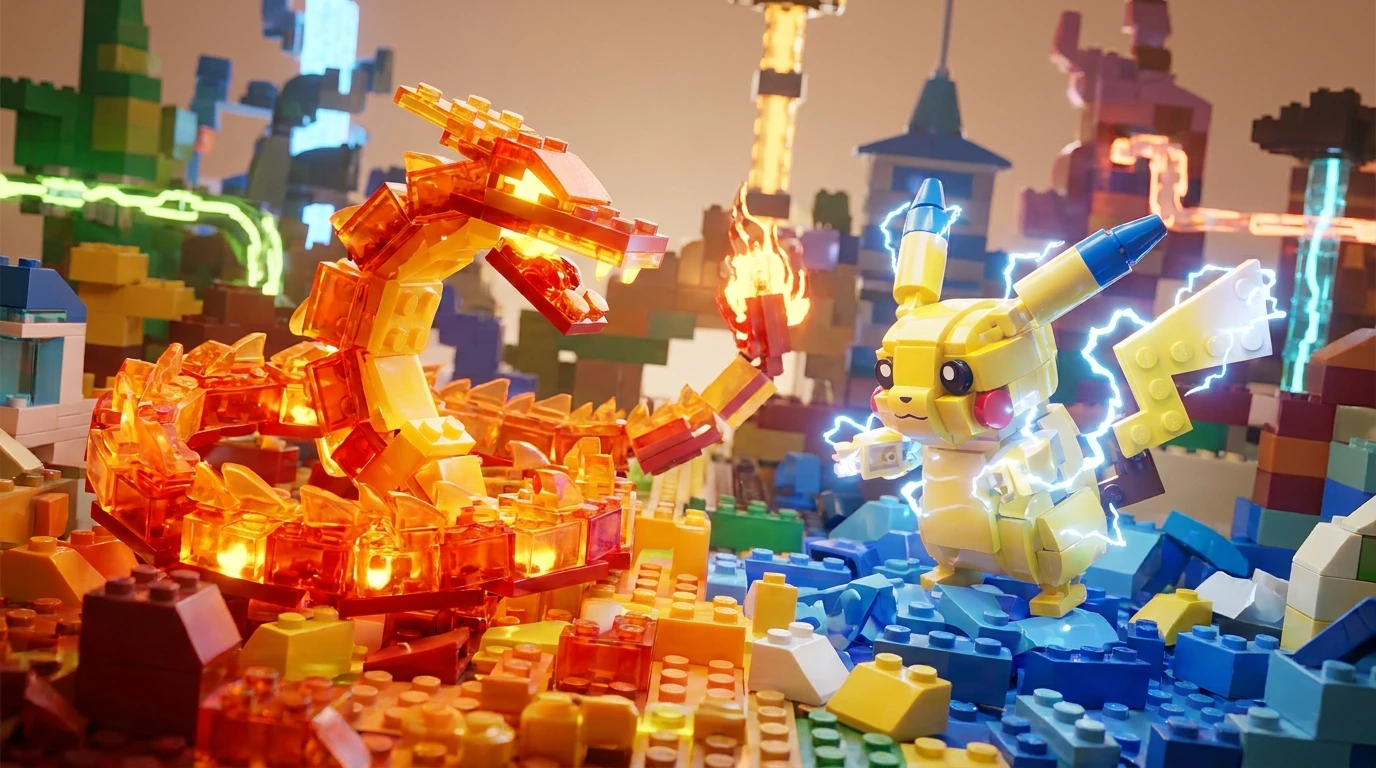
Ultimate Pokémon LEGO: Building the Brick Universe
When you combine the world’s most beloved pocket monsters with iconic interlocking bricks, Pokémon LEGO becomes an unstoppable force of creative entertainment. This fusion of colorful construction and monster catching bridges generations, offering both seasoned collectors and imaginative kids a hands-on way to construct their favorite regions, epic gym battles, and legendary creatures from the ground up. Taking characters from a digital screen and translating them into tangible, physical objects provides a profound sense of accomplishment. Every snap of a brick solidifies a connection to the expansive lore of Kanto, Johto, and beyond, allowing fans to materialize their ultimate dream teams.
Building these figures is not simply about following instructions; it represents a comprehensive exercise in spatial reasoning, creative design, and engineering. Fans construct intricate landscapes, ranging from the lush greenery of Viridian Forest to the fiery depths of Cinnabar Island, utilizing specialized bricks to capture the essence of each environment. As the community of brick enthusiasts continues to expand, the demand for highly articulated, display-worthy models reaches unprecedented heights, making this niche a permanent fixture in the broader landscape of pop culture merchandise.
Read also: Play Pokemon Let's Go Eevee: A Complete Strategy Guide; The Best 70 Inch Smart TV Models for Your Home.
The Core Benefits of Monster Brick Construction
Engaging with building sets offers significant cognitive and psychological advantages. The tactile feedback of pressing plastic elements together triggers a deeply satisfying sensory response, providing an effective method for stress relief and screen-free relaxation. Constructing complex anatomical structures, such as a poseable Charizard or a highly detailed Pikachu, requires patience, focus, and a methodical approach to problem-solving. Builders must decipher two-dimensional diagrams and translate them into three-dimensional reality, a process that naturally sharpens visual-spatial intelligence.
| Set Classification | Average Piece Count | Target Audience & Complexity |
|---|---|---|
| Micro Scale & Mini Figures | 50 – 150 pieces | Beginners. Quick, accessible builds focusing on basic character silhouettes. |
| Mid-Scale Articulated Models | 300 – 800 pieces | Intermediate. Features complex ball joints for dynamic posing and playability. |
| Ultimate Collector Series | 1500+ pieces | Advanced. Highly detailed, display-oriented centerpieces with intricate structural framing. |
The value proposition of these sets becomes evident when examining the sheer versatility of the medium. Consider the construction of a massive Gyarados model. The build relies heavily on specialized hinge elements and technic pins to create a segmented, undulating body that mimics the sea serpent’s movement. Similarly, constructing a life-sized Pokéball requires mastering stepped plate geometries to achieve a perfectly spherical shape using inherently angular bricks. These engineering challenges elevate the experience from a simple toy assembly to a sophisticated design project.
- Spatial Intelligence Enhancement: Navigating complex instruction manuals significantly improves the brain’s ability to visualize and manipulate three-dimensional objects in real space.
- Generational Bonding and Collaboration: These sets provide a shared activity where older generations can introduce classic characters to younger fans while collaborating on massive diorama projects.
- Display and Long-Term Collector Value: Once assembled, premium models serve as striking pieces of interior decor that often retain or increase in financial value within the secondary collector market.
The Origins of Monster Brick Building
The concept of translating pocket monsters into interlocking brick formats began as a speculative dream among custom builders. In the early days, passionate fans utilized standard, brightly colored blocks to approximate the pixelated sprites of the original Game Boy titles. These rudimentary, blocky sculptures lacked articulation but perfectly captured the nostalgic charm of 8-bit gaming. The earliest community-driven projects relied heavily on basic brick stacking, relying on the viewer’s imagination to fill in the missing biological details of creatures like Bulbasaur or Squirtle. The grassroots nature of these early builds proved that a massive market existed for physical, constructible versions of these iconic characters.
The Evolution of Brick Designs
As manufacturing capabilities advanced, so did the complexity of the builds. The introduction of the Studs Not On Top (SNOT) technique revolutionized how custom creators and official designers approached organic shapes. Builders were no longer restricted to building straight up; by utilizing specialized bracket and headlight bricks, they could build outward in multiple directions, allowing for smooth, studless surfaces that accurately replicated a creature’s skin or fur. Furthermore, the integration of ball-and-socket joints changed the landscape entirely. Previously static statues transformed into highly poseable action figures, capable of replicating dynamic battle stances and signature attack moves.
The Modern State of Block Toys
Today, the landscape of brick-built monsters is characterized by astonishing technical sophistication. Modern sets utilize a vast palette of unique elements, including curved slopes, wedge plates, and translucent tiles to represent elemental attacks like Flamethrower or Hydro Pump. The target demographic has officially expanded beyond children, with manufacturers producing massive, thousand-piece sets specifically tailored for the Adult Fan of LEGO (AFOL) community. These premium display models feature hidden structural supports, intricate internal geometries, and printed tiles rather than stickers, ensuring longevity and pristine aesthetics for serious collectors.
The Engineering Behind Brick Articulation
Creating an organic, moving creature out of rigid plastic demands meticulous engineering. The core challenge lies in maintaining structural integrity while allowing for a wide range of motion. Designers utilize a system of friction-based ball joints and ratcheted hinges to support the weight of massive limbs. For instance, a bipedal figure requires a perfectly balanced center of gravity; otherwise, the heavy plastic tail or oversized head will cause the model to topple. Engineers achieve this by hiding dense, weighted bricks in the feet and utilizing hollow structural framing in the upper torso. The friction tolerances in the ball joints must be calculated down to the micrometer to ensure the limbs hold their pose without snapping under pressure.
Material Science and Toy Durability
The fundamental building block of these construction sets is Acrylonitrile Butadiene Styrene (ABS) plastic. This specific polymer is chosen for its unique trifecta of chemical properties, making it the industry standard for high-quality construction toys. The manufacturing process involves heating the ABS resin and injecting it into high-pressure steel molds, ensuring every single brick is uniform and universally compatible.
- Acrylonitrile: Provides exceptional chemical resistance and high-temperature stability, ensuring the bricks do not warp on hot summer days.
- Butadiene: A rubbery substance that grants the plastic high impact strength, allowing models to survive accidental drops without shattering.
- Styrene: Gives the bricks their rigidity and signature glossy finish, enhancing the vibrant color palette necessary for animated characters.
- Clutch Power Tolerance: Precision engineering ensures the studs and tubes interlock with an accuracy of 10 micrometers, providing the perfect balance of grip and easy separation.
Day 1: Conceptualize Your Kanto Landscape
Begin your ultimate diorama project by drafting a clear blueprint. Decide which specific environment you want to build, such as a rocky mountain pass or a vibrant city gym. Sketch out the boundaries of your baseplates and designate specific zones for battling figures, foliage, and structural buildings. Establishing a firm master plan prevents structural chaos later in the build.
Day 2: Sort Bricks by Type and Color
Efficiency is paramount when dealing with thousands of small pieces. Organize your inventory utilizing a tackle box or specialized sorting trays. Sort strictly by part category (plates, bricks, slopes, tiles) rather than just by color. Finding a specific grey bracket in a sea of grey bricks is incredibly frustrating, whereas finding a grey bracket in a bin of assorted brackets is instantaneous.
Day 3: Construct the Base Terrain
Lay down your primary baseplates and begin building the foundational topography. Utilize large sloped pieces and stepped plates to create natural-looking hills, rivers, and craters. By alternating between studded surfaces and smooth tiles, you can create realistic textures that mimic grass, dirt paths, and flowing water, establishing a dynamic stage for your figures.
Day 4: Build the Structural Framework for Centers
If your diorama includes a Pokémon Center or a Gym, start with the internal skeleton. Use technic beams and sturdy pillar bricks to build a robust frame that can support a heavy roof. Focus on the modularity of the building; design the roof and upper floors to be easily removable so you can access the highly detailed interiors later.
Day 5: Assemble the Core Pokémon Figures
Shift your focus from the environment to the characters. Follow your instruction manuals meticulously to assemble the articulated figures. Pay close attention to the orientation of the ball joints and friction hinges, ensuring the maximum range of motion. Test the balance of each figure to ensure they can stand independently on the studded terrain you built on Day 3.
Day 6: Integrate Micro-Accessories and Foliage
Details bring a static brick world to life. Populate your landscape with brick-built trees, berry bushes, and scattered rocks. Add micro-accessories like tiny potions, backpacks, and specialized battle effect pieces near the figures to create a sense of active narrative and motion within the frozen plastic scene.
Day 7: Apply Final Lighting and Displays
Elevate your completed diorama by installing aftermarket LED lighting kits. Route micro-wires underneath the baseplates to illuminate the interiors of buildings or to add a glowing effect to fire and electric-type attacks. Place the finished masterpiece on a sturdy, dust-free shelving unit away from direct sunlight to preserve the vibrant plastic colors.
Myth: Brick sets are exclusively designed for young children.
Reality: While there are product lines tailored for early childhood development, a massive segment of the market is engineered strictly for adult collectors. These advanced sets feature thousands of intricate pieces, complex internal geometries, and delicate structural building techniques that require advanced fine motor skills and extreme patience to execute properly.
Myth: You must strictly follow the provided instruction booklet.
Reality: The instructions are merely a starting point. The entire philosophy of interlocking bricks revolves around infinite customization. Builders frequently dismantle official sets to harvest the specialized colored parts, using them to design completely original creatures and custom regions in a process known as building My Own Creation (MOC).
Myth: Display models fade and degrade rapidly over time.
Reality: High-quality ABS plastic is incredibly resilient. Provided the models are kept away from prolonged, direct ultraviolet sunlight and extreme heat sources, the bricks will maintain their structural clutch power and vibrant pigmentation for decades. Proper storage and regular dusting guarantee their longevity as display pieces.
Myth: Building spherical objects like Pokéballs is impossible with square bricks.
Reality: Advanced builders utilize complex mathematical techniques, specifically the Lowell Sphere method, to achieve perfectly rounded shapes. By building a cubic inner core covered in outward-facing studs, builders attach curved slopes and plates on all six sides, creating a flawlessly spherical exterior out of angular components.
Are there official electronic components for these sets?
Some premium sets include specialized light bricks or basic motorization kits to animate specific features, like flapping wings or glowing tails. However, the majority of complex lighting and mechanical automation relies on third-party electronic kits explicitly designed to integrate with standard brick systems.
How do I safely clean dust off my completed figures?
The safest and most effective method for cleaning intricate brick models is using a soft-bristled makeup brush or a clean, dry paintbrush. For hard-to-reach crevices, a can of compressed air works perfectly. Avoid using wet cloths or chemical cleaners, as moisture can get trapped between the studs and degrade the plastic over time.
Can I mix these bricks with other standard building sets?
Yes, the vast majority of interlocking brick brands utilize the exact same universal patent dimensions for their studs and tubes. This universal compatibility means you can seamlessly integrate architectural elements, technic gears, and standard classic bricks to expand your custom regions.
What is the best way to store loose pieces?
For long-term storage, keep loose pieces in transparent, airtight plastic drawers or tackle boxes, categorized by part type. Ensure the storage area is climate-controlled and away from direct sunlight to prevent the ABS plastic from experiencing thermal expansion or UV discoloration.
How long does a 1000-piece set typically take to build?
An experienced builder can typically assemble a 1000-piece set in approximately three to four hours. However, those new to complex instructions, or builders who prefer a leisurely, relaxing pace, may spread the construction process out over several evenings or an entire weekend.
Are replacement pieces available for lost parts?
Most major brick manufacturers provide an online customer service portal where users can request free replacement parts for pieces that were missing from the box or broken during assembly. Additionally, massive secondary marketplaces exist online to purchase specific individual bricks by the piece.
Do these sets appreciate in financial value?
Many premium, collector-targeted sets experience significant appreciation in value once they are officially retired by the manufacturer and are no longer available in retail stores. Sets featuring highly popular, iconic characters or limited-edition anniversary packaging tend to command the highest premiums on the secondary market.
Ultimately, engaging with this creative medium allows fans to interact with their favorite franchise in a deeply tactile, rewarding manner. Whether you are constructing a tiny desktop companion or a sprawling, illuminated diorama of an entire region, the possibilities are limited only by your imagination and your brick inventory. Grab your baseplates, sort your elements, and start building your ultimate pocket monster team today!





Leave a Reply