

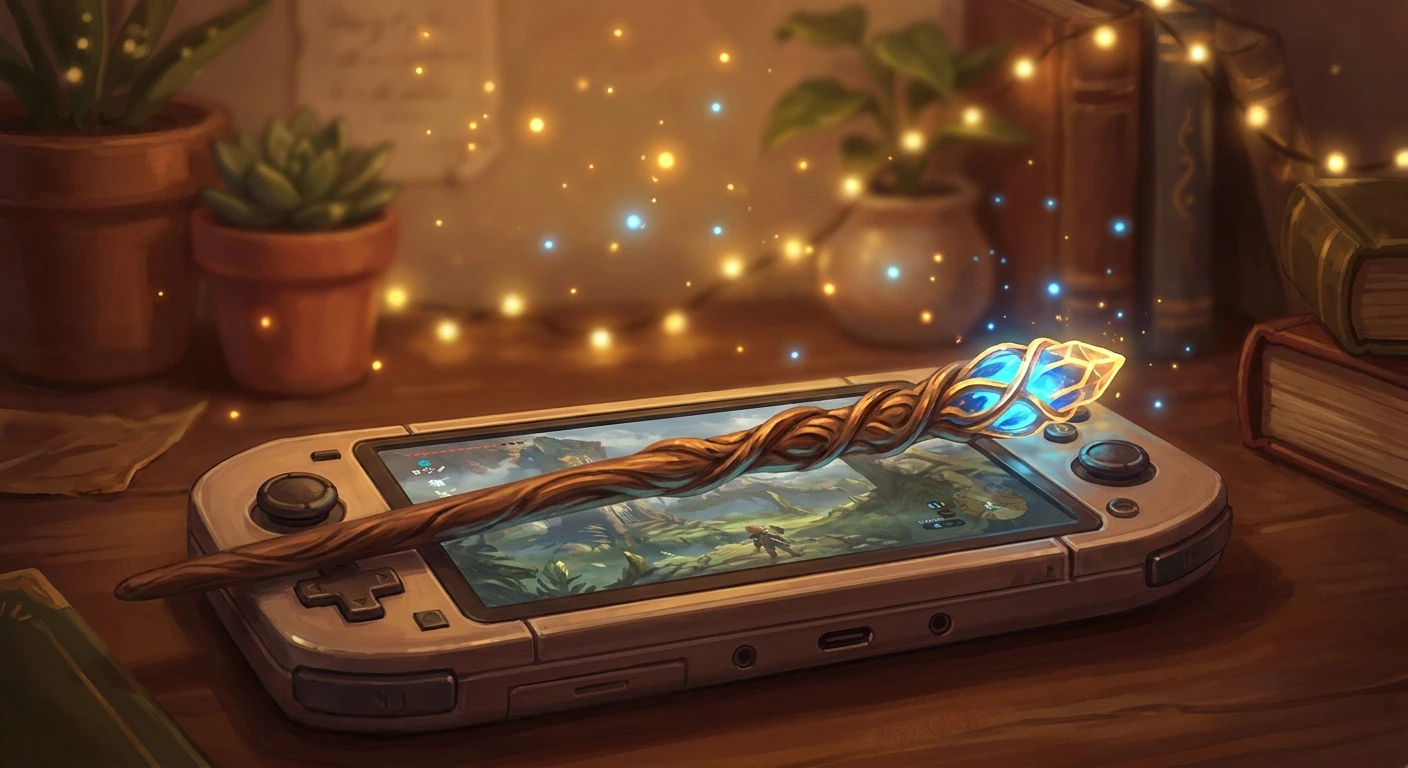
The Complete Truth About The hogwarts legacy switch Version
Let me give you the absolute real breakdown of the hogwarts legacy switch experience, totally unfiltered and straight to the point. Sitting in a cozy coffee shop here in Kyiv during a scheduled rolling blackout last winter, my handheld Nintendo console became an absolute lifesaver. Wandering around Hogsmeade while the city outside was totally dark felt incredibly surreal, offering a magical escape when I needed it most. That specific moment made me realize the massive appeal of having an entire wizarding world right in my backpack, ready to play anywhere.
Playing this massive open-world role-playing game on a handheld device genuinely demands a few technical compromises, but the sheer magic of portable spellcasting remains an unbelievable achievement. You might be wondering if it is actually worth spending your hard-earned money on a version that lacks the graphical horsepower of a high-end desktop rig. The truth is, the developers pulled off a minor miracle getting this software to run on mobile hardware from 2017. I want to walk you through exactly how it plays, looks, and feels right now, giving you a friend-to-friend perspective on the performance. We will look at the frame rates, the visual downgrades, and the sheer joy of catching magical beasts while riding the subway.
If you are on the fence about picking up this specific port, you need to understand exactly what you are getting into. The portability adds a massive layer of convenience, but you have to adjust your expectations regarding visual fidelity and loading times. Let me break down the core mechanics, benefits, and optimizations you need to know.
To really grasp the value, look at this quick comparison table showcasing how the hardware stacks up against the big consoles.
| Feature | Nintendo Console | Next-Gen Platforms |
|---|---|---|
| Portability | Exceptional (Play anywhere) | None (Tied to monitor/TV) |
| Loading Zones | Frequent (Entering shops) | Seamless |
| Frame Rate | Target 30 FPS (Occasional drops) | 60 FPS Performance Mode |
The core value proposition here is simple: you get the entire, uncut adventure. Example one: I managed to finish a dozen Merlin Trials while waiting for a train, something impossible on a traditional home setup. Example two: the ability to instantly put the console to sleep right in the middle of a heated duel with poachers, and resume exactly where I left off hours later without rebooting. It changes how you consume the massive map. However, to get the absolute best experience out of the game, you need to optimize your hardware settings.
- Install strictly on internal storage: Do not put this massive software on a cheap SD card. The internal memory of the console is significantly faster, and it reduces the notoriously long loading screens when moving between castle sectors.
- Stick to handheld mode: Stretching a low-resolution dynamic image across a massive 4K television highlights the blurry textures. Keep it on the smaller screen, preferably the OLED model, where the pixel density tightens up the visuals beautifully.
- Adjust your camera sensitivity immediately: The default thumbstick aiming feels incredibly sluggish. Push the camera sensitivity and aiming acceleration up by at least thirty percent to make wand combat feel snappy and responsive.
- Turn off chromatic aberration and film grain: The handheld screen already has enough visual noise due to the upscaling. Disabling these post-processing effects in the visual settings menu instantly provides a cleaner, sharper image.
The Origins of Portable Magic
When this project was first announced, the gaming community expressed massive skepticism. Bringing a dense, technically demanding title to weaker hardware seemed like a foolproof recipe for disaster. The initial release date saw multiple agonizing delays. While PC and big console players were exploring the Scottish Highlands, handheld players were left waiting for months. The developers needed that extra time specifically to re-engineer the entire foundation of the software. They could not just compress the textures; they had to fundamentally alter how the map loaded into the memory.
The Evolution of the Switch Port
Upon its eventual launch, the day-one patch was absolutely massive. Players quickly realized that the development team made distinct structural changes. Instead of a purely seamless transition from the open world into local shops, distinct loading screens were implemented. It was a harsh reality check, but a totally necessary step to prevent the game from crashing constantly. Over the subsequent months, consecutive patches rolled out, stabilizing the frame pacing and fixing massive texture pop-in issues that plagued early adopters. The evolution was rocky, but the commitment to patching was evident.
The Modern State of the Game
Now that we are solidly in 2026, the dust has completely settled on this port. We can finally judge it fairly alongside other ‘impossible’ portable conversions like The Witcher 3 or Doom Eternal. The game currently sits in a very stable state. While the graphics certainly look like a late-era Xbox 360 title, the mechanics are intact, and the crashes are incredibly rare. It remains a massive commercial success precisely because people crave the fantasy of carrying a wand in their pocket, regardless of the lower polygon counts.
Understanding the Handheld Hardware Limitations
To really appreciate what is happening on your screen, you need a basic grasp of the technical hurdles. The portable console only has 4 gigabytes of shared RAM, whereas a modern PC requires at least 16 just to breathe properly. To make the game run, the engine aggressively unloads assets the second you look away from them. This is why spinning the camera too fast might result in a brief stutter or a blurry wall that takes half a second to snap into high definition. The CPU is also heavily bottlenecked when calculating complex physics, which means destructible environments and spell particle effects are vastly toned down compared to the premium versions.
The Technology Behind Dynamic Resolution
The real hero making this playable is AMD’s FidelityFX Super Resolution technology, adapted specifically for this hardware. The game is rarely rendering at a native 720p. Instead, it internally runs at a much lower resolution—sometimes dipping drastically during heavy combat—and uses an intelligent upscaling algorithm to sharpen the final output. This dynamic scaling is what keeps the game from freezing when five spiders and two dark wizards are all throwing fireballs at you simultaneously.
- Separated Loading Cells: The continuous world map was physically sliced into isolated chunks to prevent memory overflows.
- Reduced Non-Playable Characters: The bustling hallways of the school are noticeably emptier to save on CPU processing cycles.
- Baked Lighting Replacements: Real-time dynamic shadows were stripped out and replaced with pre-calculated, static lighting maps to maintain performance.
- Aggressive Level of Detail (LOD) Scaling: Trees and mountains turn into basic geometric shapes when viewed from a medium distance to save rendering power.
Day 1: Mastering the Controller Layout
Your first day should be entirely dedicated to getting comfortable with the unique Joy-Con ergonomics. The smaller thumbsticks make precision aiming a bit tricky at first. Spend a good hour just walking around the initial tutorial areas. Practice locking onto targets and toggling through your spell wheels quickly. Muscle memory is everything, especially since you will eventually have to juggle up to sixteen different spells in the heat of battle. Don’t rush; just get the feel of the movement.
Day 2: Navigating Hogwarts Castle Without Lag
On your second day, you will arrive at the school. This place is a maze, and honestly, running too fast down the corridors will cause the framerate to hitch. Learn to navigate at a normal jogging pace. Take the time to memorize where the major Floo Flame fast-travel points are located. Using fast travel intelligently prevents the system from having to suddenly load massive new architectural wings of the castle. Explore slowly and let the environment render properly around you.
Day 3: Optimizing Your Wand Combat
Combat requires specific strategies on this hardware. Because dropping frames can mess up your dodge timing, you need to rely heavily on the target lock-on feature. On day three, practice casting your basic Protego shield. On the portable screen, the glowing halo indicator above your character’s head—warning you of an incoming attack—can be a bit small. Train your eyes to watch for that tiny golden flash so you can parry effectively without relying solely on the larger, more obvious visual cues.
Day 4: Managing Inventory on a Smaller Screen
By day four, your gear slots will be filling up rapidly. The user interface text on the portable screen is notoriously tiny. Dedicate time to clearing out your inventory constantly. Sell off lower-tier robes and hats every time you pass a merchant. The menu cursor can feel a bit sluggish, so keeping a clean, minimalist inventory prevents you from spending tedious minutes scrolling through dozens of identical pairs of gloves while squinting at the screen.
Day 5: Exploring the Open World Effectively
Now it is time to grab your broom and hit the skies. Flying is incredibly fun, but flying too close to the ground at top speed forces the console to load vegetation wildly fast, leading to severe pop-in. Stay higher in the sky to keep the framerate buttery smooth. Use your Revelio spell frequently while airborne to ping points of interest, then land deliberately. Breaking up your flight paths helps the hardware manage the continuous data streaming much better.
Day 6: Tackling Frame Drops During Boss Fights
You will face tougher enemies now. Boss fights often feature a ton of magical projectiles, explosions, and chaotic movement. If you notice the game starting to chug, focus on crowd control. Freeze enemies with Glacius or levitate them with Levioso to temporarily halt their attack animations. Reducing the amount of active, moving threats on screen directly improves the frame rate, giving you the breathing room to execute your heavier damage combinations without the game lagging.
Day 7: Completing the Main Story on the Go
By the end of your first week, you are fully adapted to the quirks of the hardware. You can now confidently tackle the massive story missions. Make sure your console is fully charged before entering any deep dungeon, as these lengthy sequences often lack convenient save points. Enjoy the fact that you can lay in bed and solve ancient magical puzzles. You have successfully navigated the technical hurdles and can fully embrace the portable wizarding life.
Myth: The game is completely unplayable and fundamentally broken on Nintendo hardware.
Reality: It is highly functional and runs at a mostly stable 30 frames per second. While it features significant visual downgrades, the actual gameplay loops, combat mechanics, and exploration are fully intact and highly enjoyable.
Myth: You get the exact same seamless open world as the home console editions.
Reality: The map has been fractured. You will encounter brief loading screens when entering Hogsmeade shops or moving between specific, heavily detailed regions of the map.
Myth: The battery life drains in twenty minutes due to the heavy graphics.
Reality: If you are playing on the standard or OLED models with moderate brightness settings, you can easily squeeze out about 2.5 to 3 hours of continuous gameplay before needing to plug in the charger.
Myth: They cut out specific side quests and beasts to make the file size smaller.
Reality: Every single piece of content, voice line, magical beast, and quest from the original release is present. Nothing was removed mechanically; only the graphical wrapper was compressed.
Does it require a continuous internet connection?
No. You only need the internet for the initial day-one patch download. After that, the entire single-player campaign is fully playable offline, perfect for flights or long car rides.
Can I transfer my save files from PC or PS5?
Unfortunately, no. There is no cross-save functionality supported by the developers. You have to start a brand new student journey on this specific console.
Are there any exclusive features for this version?
There are no exclusive gameplay features, but the sheer ability to pause instantly, throw the console in a bag, and resume anywhere is a massive logistical feature.
Does the physical cartridge contain the full game?
No. The cartridge acts mostly as a licensing key and holds basic data. You are strictly required to download a massive secondary file to your internal storage to actually play the game.
How large is the digital download?
You need to ensure you have at least 30 gigabytes of free space available. A high-speed internet connection is highly recommended for the initial installation process.
Is it noticeably better on an OLED screen?
Absolutely. The deep blacks and vibrant colors of the OLED display do an incredible job of masking the lower-resolution textures, especially during the darker nighttime sequences in the Forbidden Forest.
Will future DLC come to this version simultaneously?
While no major story DLC has been released as of 2026, any cosmetic updates or minor quality-of-life patches typically hit this platform alongside all the other major systems.
At the end of the day, having the ability to cast spells and fly a broomstick anywhere in the world feels like true magic. Yes, you sacrifice the ultra-high-definition graphics, but the heart and soul of the adventure are perfectly preserved. If you value flexibility and love mobile gaming, do not hesitate to jump in. Grab your copy, clear out your storage space, and start your journey at the school of witchcraft and wizardry today!


Leave a Reply