

Honest Ghost Recon Breakpoint Review: The Complete Breakdown
Welcome to the ultimate Ghost Recon Breakpoint Review, where we analyze exactly what this massive open-world tactical shooter has to offer years after its initial launch. Look, you have probably heard the endless debates about how this game started, but if you are wondering whether it is worth booting up right now, the short answer is absolutely yes. Ubisoft has fundamentally overhauled the mechanics, turning a rocky launch into one of the most customizable military sandboxes available today. Set on the fictional island archipelago of Auroa, players are thrust into a high-tech corporate utopia gone horribly wrong. Skell Technology, a Silicon Valley-style drone manufacturer, has been hijacked by a rogue military faction known as the Wolves, led by former Ghost Cole Walker. You are stranded behind enemy lines with no backup, forcing you to rely on scavenged gear, tactical survival skills, and pure strategic planning. Throughout this comprehensive analysis, we will map out everything from the revamped gunsmith features to the intricate drone combat systems. Grab your gear, because we are breaking down every single aspect of this massive island operation, highlighting the strengths, acknowledging the lingering flaws, and giving you the unfiltered facts.
Breaking Down the Core Experience: Gameplay and Mechanics
The core gameplay loop in Breakpoint is heavily focused on player agency and tactical freedom. Unlike standard run-and-gun arcade shooters, this title demands patience and strategic positioning. You are tasked with infiltrating heavily guarded Skell Tech facilities, utilizing drones for reconnaissance, and executing synchronized takedowns. What makes the modern version of this game so compelling is the sheer level of customization offered to the player. The value proposition here is massive: you get a beautiful open world, a complex weapon customization system, and a deeply satisfying stealth loop. Let us look at how the core features have shifted over time.
Read also: Master xenoblade chronicles definitive edition Ultimate Guid; The Best Way to Play mario galaxy 2 switch.
| Game Feature | Original Launch State | Current Modern State |
|---|---|---|
| Gear System | Forced looter-shooter mechanics with tiered item levels. | Fully optional; can switch to immersive mode with realistic weapons. |
| Squad Dynamics | Forced solo play unless connected with real human co-op partners. | Fully customizable AI teammates with distinct abilities and orders. |
| Survival Elements | Light and somewhat intrusive without real tactical benefits. | Balanced stamina management and injury systems that alter movement. |
To truly grasp the value of the gameplay, you need to understand the main pillars that hold the entire structure together. Here are the primary reasons players keep coming back:
- Tactical Stealth and Infiltration: The game rewards silent approaches. Hiding in the mud using the prone camo feature, syncing shots with your AI teammates, and dropping multiple guards simultaneously feels incredibly rewarding.
- Expansive Class System: Whether you want to play as a Panther to utilize smoke screens and SMGs, or a Sharpshooter to take out enemies from a kilometer away, the class progression offers meaningful gameplay variety.
- The Gunsmith System: Customizing your firearms is a game within a game. Swapping out a short barrel for maneuverability in close-quarters combat or adding an extended magazine drastically changes how the weapon handles.
These elements combine to create a sandbox where no two firefights play out exactly the same way. The environment itself becomes a weapon, allowing you to use terrain, weather, and time of day to your advantage.
The Origins of the Auroa Project
The transition from the previous entry, Wildlands, to Breakpoint was marked by a desire to push the franchise into a more gritty, survival-focused direction. Originally, the developers envisioned a scenario where the elite hunters became the hunted. Instead of operating with the full backing of the US military, players were stripped of their resources and forced to survive in a hostile, isolated environment. The original design leaned heavily into RPG mechanics, adding colored loot tiers and gear scores, which heavily divided the core fanbase who expected a realistic tactical shooter.
Evolution Through Major Updates
Recognizing the community feedback, Ubisoft initiated one of the most comprehensive post-launch rescue operations in modern gaming. The introduction of the Ghost Experience update was the turning point. This massive overhaul allowed players to completely disable the gear score, turning the game back into a lethal, realistic shooter where a single headshot eliminates an enemy, regardless of their supposed level. Furthermore, the development team reintroduced AI teammates, a heavily requested feature that fundamentally fixed the solo player experience.
The Modern State of the Game
Today, the game stands as a highly polished tactical sandbox. The archipelago of Auroa features diverse biomes ranging from snow-capped peaks to dense, humid jungles, all meticulously crafted to provide distinct tactical challenges. The addition of special live events, crossovers with other major franchises, and the Motherland expansion have provided hundreds of hours of high-quality content. Players now have the definitive military simulation-lite experience, boasting unparalleled granular control over difficulty, HUD elements, and enemy intelligence.
Graphics and AnvilNext Engine Performance
From a technical standpoint, the game is powered by the AnvilNext 2.0 engine, which excels at rendering massive, seamless open worlds. The engine handles complex environmental rendering with astonishing detail. When traversing Auroa, you will notice dense foliage physics that react to weather patterns and helicopter downwash. The engine also calculates complex ballistics, requiring players to account for bullet drop and travel time when engaging targets at extreme distances. Lighting plays a crucial role, with dynamic day-night cycles directly affecting enemy visibility and patrol routes.
AI Programming and Drone Mechanics
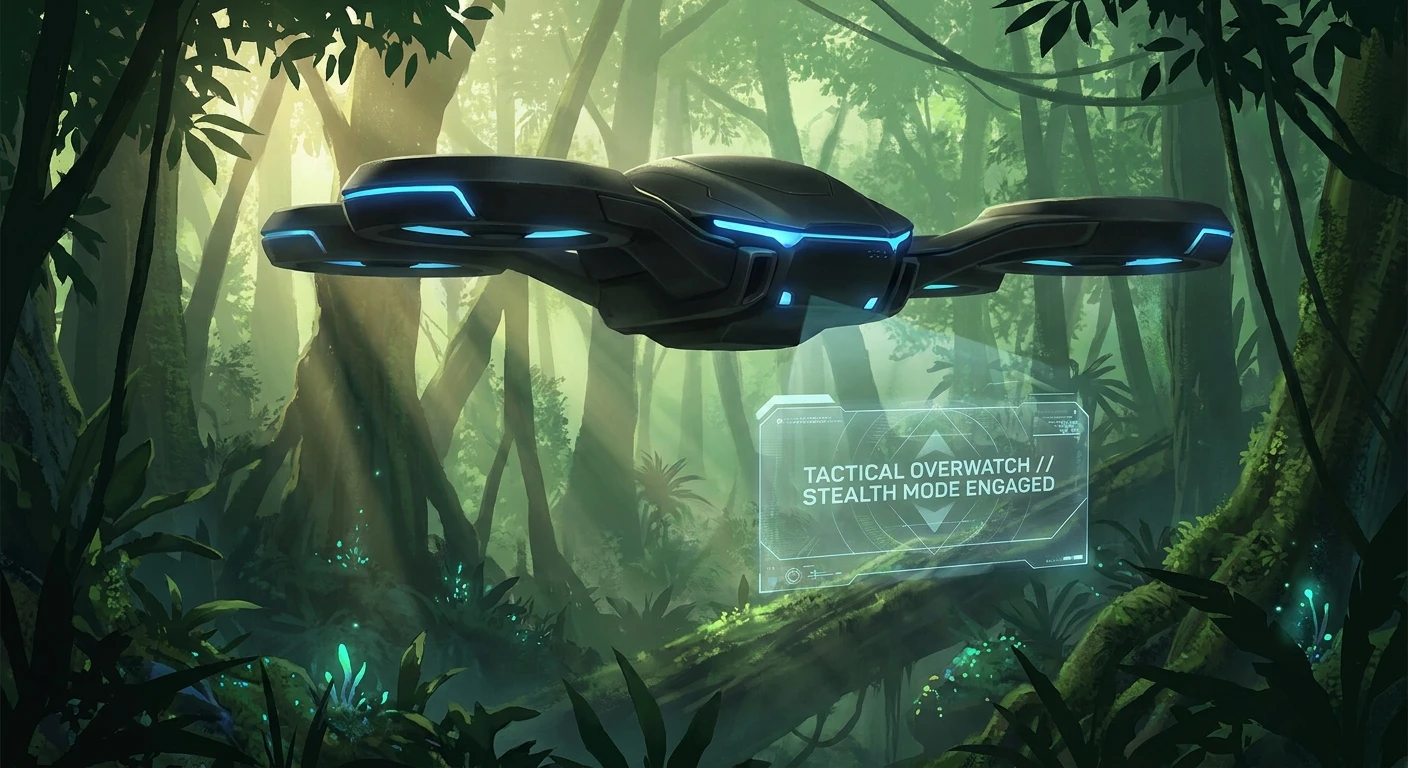
The artificial intelligence governs both human enemies and automated drone defenses. Skell Technology drones range from small, agile flying cameras to massive, heavily armored Behemoth tanks. The AI programming dictates aggressive flanking maneuvers when your position is compromised.
- Dynamic Detection Meters: Enemy vision cones adjust dynamically based on ambient lighting, player stance, and equipped camouflage.
- Acoustic Footprint: Different surfaces generate varying levels of noise; sprinting on metal grating alerts enemies much faster than crawling through soft mud.
- Ballistic Penetration: The physics engine calculates material density, allowing high-caliber rounds to punch through thin wood or sheet metal, but stopping dead against concrete.
- Drone Patrol Algorithms: Aerial drones follow randomized but logical patrol paths over high-value Skell facilities, requiring players to memorize EMP grenade trajectories.
7-Day Guide to Conquering Auroa
Day 1: Mastering the Bivouac
Your first step is understanding the Bivouac system. These hidden camps are your safe havens. Spend your first sessions learning how to craft rations, apply temporary buffs, and select the right vehicle for the terrain ahead.
Day 2: Disabling the Gear Score
Immediately navigate to the Ghost Experience settings. Turn off gear score and set the loot system to immersive mode. This transforms the game from a numbers-based grind into a lethal tactical simulation where tactics matter more than weapon stats.
Day 3: Customizing HUD for Immersion
Strip away the clutter. Turn off the enemy clouds on the minimap and disable the glowing detection meters. Forcing yourself to rely on visual and audio cues drastically improves the tension and atmosphere of infiltration.
Day 4: Selecting Your Starting Class
Focus on leveling up one specific class. The Assault class is great for raw survivability, while the Echelon class provides advanced stealth capabilities, including a shock pistol and sonar vision. Master your class technique before branching out.
Day 5: Infiltrating Behemoth Drone Areas
Begin targeting the massive Behemoth drones guarding high-tier weapon blueprints. Use EMP grenades to stun them, then coordinate heavy sniper fire or rocket launchers to hit their exposed blue core weaknesses.
Day 6: Upgrading Your Weapon Mastery
Gather weapon parts by dismantling found firearms. Use these components at the gunsmith to upgrade your favorite assault rifle or sniper. Upgrading a weapon to Mark III provides significant bonuses to handling and accuracy.
Day 7: Tackling the Raid Co-op
Once you are fully geared and understand the mechanics, team up with three other players to tackle Project Titan. The raid island features extreme challenges, complex boss mechanics, and requires absolute communication and synchronized tactics to survive.
Myths & Reality
Myth: The game forces you to constantly grind for better loot to progress through the story.
Reality: The immersive mode allows you to completely turn off gear scores, meaning a basic rifle found in the first hour can carry you through the entire campaign if you land your shots.
Myth: You have to play online with friends to have a good time.
Reality: The addition of highly customizable AI teammates means the solo experience is incredibly robust. You can issue specific orders and execute perfect sync shots alone.
Myth: The survival mechanics are annoying and slow down the pacing.
Reality: They act as optional tactical layers. Drinking water and managing stamina only become critical if you choose to play on the highest tactical difficulty settings.
Myth: Drones ruin the realistic stealth experience.
Reality: Drones require you to adapt your strategy, using EMPs, cloaking spray, and specific class abilities to bypass or disable technological threats efficiently.
Is it worth playing now?
Yes, the massive updates have transformed it into a premier tactical sandbox that offers unparalleled freedom in how you approach every single mission.
Does it have crossplay?
Unfortunately, there is no crossplay support between different console families or PC, so you must coordinate with friends on the same platform.
How long is the campaign?
The main storyline takes roughly 25 to 30 hours, but exploring Auroa, completing faction missions, and playing the DLC expansions easily pushes playtime past 100 hours.
Can you play offline?
No, the game requires a persistent internet connection to access your profile, even if you are playing entirely solo with AI teammates.
Are the DLCs good?
The post-launch content, specifically the Operation Motherland expansion, is widely considered the best content in the game, introducing a conquest mode that completely changes world dynamics.
What are the best weapons?
The M4A1 assault rifle and the TAC50 sniper rifle are community favorites due to their incredible versatility, high damage output, and manageable recoil patterns.
How does it compare to Wildlands?
While Wildlands offered a more lively civilian world, this title offers vastly superior character movement, deeper stealth mechanics, and a much more intricate weapon customization system. Thank you for reading our comprehensive analysis. If you are ready for intense tactical action, grab your squad and deploy to Auroa today!





Leave a Reply