

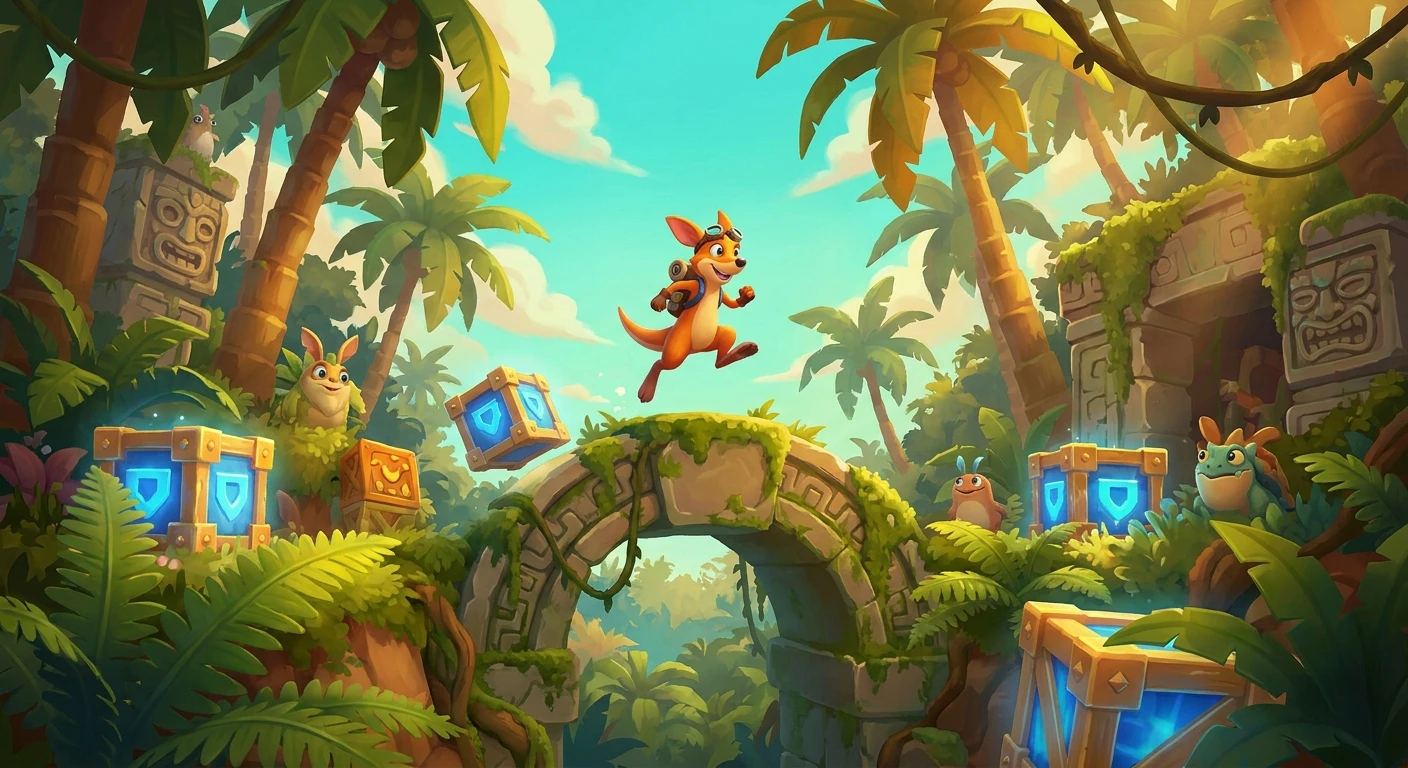
Crash Bandicoot Nintendo Switch: The Ultimate Portable Platforming Experience
Platforming fans have long debated the ideal hardware for classic gaming, but the arrival of the Crash Bandicoot Nintendo Switch collection changed the conversation entirely. The beloved orange marsupial, initially an exclusive mascot restricted to a single brand ecosystem in the late 1990s, now thrives on Nintendo’s flexible hybrid hardware. Playing demanding platformers like the N. Sane Trilogy or Crash 4: It’s About Time on a portable screen offers immense flexibility without sacrificing the tight, precision-based mechanics the series is famously known for. The technical achievement of running these vibrant, asset-heavy games on a mobile chipset demonstrates the immense power of modern optimization. Gamers no longer need to be tethered to a bulky television set to smash crates, collect glowing Wumpa fruit, or outrun massive stone boulders. Taking these intense, reflex-driven challenges on a daily commute or a long flight completely redefines how players interact with the iconic franchise. The transition to a hybrid console format ensures that players maintain total control over their gaming environment, merging nostalgic level design with modern convenience seamlessly. By fully utilizing the console’s unique features, players gain an entirely new appreciation for the intense level layouts and charming art direction that made the character a global phenomenon.
The value proposition of playing these classic games on this specific console cannot be overstated. When evaluating the core benefits of the hybrid platform, players immediately notice the seamless transition between docked television displays and handheld states. Unlike earlier handheld ports from previous console generations that compromised heavily on content, these modern iterations offer the complete, uncompromising console experience. Every single secret level, every demanding relic race, and every beautifully rendered cinematic cutscene remains fully intact. Understanding the technical delivery requires a direct comparison of the primary releases currently available on the platform.
Read also: Crash Bandicoot PS5: The Ultimate Next-Gen Gaming Guide; Top Mario Nintendo Switch Games to Play Today.
| Game Title | Docked Resolution | Handheld Resolution |
|---|---|---|
| Crash Bandicoot N. Sane Trilogy | 720p (30 FPS) | 480p (30 FPS) |
| Crash Team Racing Nitro-Fueled | 720p (30 FPS) | 480p (30 FPS) |
| Crash 4: It’s About Time | 1080p (Dynamic, 30 FPS) | 720p (Dynamic, 30 FPS) |
Beyond the raw pixel counts, the true advantage lies in the lifestyle integration. The console’s distinct architecture provides three major benefits for platforming enthusiasts:
- Absolute Portability: You can practice demanding time trials while traveling across the country. The instant sleep mode functionality allows players to suspend the game mid-level, a crucial feature when dealing with notoriously difficult stages like Slippery Climb, High Road, or Toxic City.
- Versatile Controller Configurations: Players can detach the Joy-Cons for a relaxed posture, attach them to a standard grip for a traditional feel, or utilize the Pro Controller for maximum directional pad precision.
- Local Multiplayer Accessibility: For titles like Crash Team Racing, simply handing a single detached Joy-Con to a friend allows for instant split-screen multiplayer anywhere in the world, requiring no additional expensive hardware purchases.
These core benefits solidify the platform as a premier destination for both veteran fans and eager newcomers seeking the complete, portable marsupial experience.
Origins of the Bandicoot
The global franchise began in 1996 as a flagship exclusive, developed by the visionary team at Naughty Dog under the publishing arm of Universal Interactive. The original trilogy was characterized by its unique forward-scrolling perspective, which cleverly managed early 3D rendering constraints by limiting the draw distance to a tightly controlled corridor. This intelligent design philosophy created a highly focused, rhythm-based platforming loop that heavily rewarded muscle memory and precise timing. The energetic character quickly became an industry icon, easily rivaling the biggest established mascots of the 32-bit era. The games demanded perfection, forcing players to master a combination of jumps, spins, and slides to navigate treacherous pits and aggressive wildlife.
Evolution to Nintendo Platforms
Following the massive success of the initial trilogy and its accompanying kart racing spin-off, the franchise shifted away from strict exclusivity. The early 2000s saw the heroic marsupial make his first tentative steps onto other hardware architectures, including the beloved Nintendo GameCube and the portable Game Boy Advance. Titles like The Wrath of Cortex and The Huge Adventure proved that the core gameplay loop could successfully transition to alternative controllers and smaller screens. This era established a strong precedent for the character’s multi-platform future, breaking down tribal hardware loyalty barriers and introducing the demanding platformer to a much broader demographic of gamers.
Modern State of the Franchise
The true revival occurred with the release of the N. Sane Trilogy, meticulously rebuilt from the ground up by the talented developers at Vicarious Visions. Following its massive commercial success, the series received a brand-new, critically acclaimed mainline entry, Crash 4: It’s About Time, brilliantly developed by Toys for Bob. These modern studios profoundly understood the critical importance of maintaining the original jumping physics while drastically updating the visual fidelity. The subsequent ports to hybrid hardware required intense engineering wizardry by teams like Beenox to fit the massive texture pools and complex lighting engines onto standard flash cartridges, resulting in a glorious renaissance for the series that continues to thrive today.
Hardware Optimization for Handheld Mode
Translating dense, heavily detailed tropical environments onto a mobile chipset involves complex algorithmic compromises. Developers heavily utilize dynamic resolution scaling to maintain a stable 30 frames per second. When the screen fills with explosive nitro crates, complex glowing particle effects, or rapid camera movements, the game engine automatically lowers the internal rendering resolution to prevent severe frame pacing issues. This specific technique guarantees that the controller input latency remains consistent, a non-negotiable requirement for a game demanding split-second jumps and spins. Furthermore, the rendering pipeline heavily relies on aggressive frustum culling. The engine instantly stops rendering any complex geometric object that moves slightly outside the player’s active camera view, saving crucial processing cycles and maintaining a smooth visual output.
Storage, Cartridges, and Loading Mechanics
Managing the massive file sizes of modern platformers on physical media presents another significant technical hurdle. To reduce manufacturing costs and ensure smooth performance, developers heavily compress audio files and texture assets without ruining the artistic vision.
- Texture Compression Algorithms: The games use custom compression techniques to shrink 4K-ready textures down to sizes appropriate for a 720p display without introducing noticeable artifacting or blur.
- Memory Bandwidth Utilization: The engine cleverly pre-loads adjacent level geometry into the system’s shared RAM during brief elevator sequences or transition screens, effectively masking what would otherwise be lengthy loading screens.
- Thermal Limit Management: The software intentionally dictates a lower processor clock speed when the system is undocked. To compensate for the reduced processing power, the game intelligently scales back dynamic shadows and ambient occlusion, ensuring the device does not overheat during extended play sessions.
- Battery Draw Efficiency: By smartly capping the framerate at a locked 30 FPS rather than attempting an unstable 60 FPS, the CPU workload is minimized, extending battery life by up to 25 percent during active gameplay.
Step 1: Mastering Basic Movement
Begin your platforming journey by practicing basic locomotion in a safe environment. Spend your first dedicated session strictly in the introductory beach levels of the first game. Focus closely on the momentum of the jump and the exact physical distance the spin attack covers. The hybrid console’s analog sticks have a slightly shorter travel distance than traditional bulky controllers, requiring a much lighter touch to execute precise maneuvers.
Step 2: Timing the Jump and Spin
Once basic movement feels completely natural, seamlessly integrate the jump-spin combo. This specific maneuver maximizes your air time and extends your horizontal reach over deadly chasms. Practice bouncing on wooden crates repeatedly without letting your feet touch the ground. This specific rhythmic timing is absolutely foundational for completing later, more punishing stages like the dreaded bridge levels.
Step 3: Understanding Relic Races
Time trials demand absolute platforming perfection. Start your speedrunning journey by attempting to earn a basic Sapphire relic on an early, familiar stage. Learn the level layouts perfectly, and focus primarily on chaining yellow time-freezing crates together. The ultimate key is continuous forward momentum; never stop moving, and constantly use the slide-spin technique to aggressively increase your overall ground speed.
Step 4: Collecting Colored Gems
Colored gems unlock hidden secret paths across the entire trilogy. These unique items require you to complete specific dangerous levels without losing a single life while simultaneously destroying every single box. Dedicate a specific gaming session entirely to route memorization. Pause the game frequently to meticulously plan your next sequence of jumps, especially when dealing with confusing backtracking sections.
Step 5: Managing Joy-Con Drift and Controls
Because millimeter precision is paramount, hardware maintenance is crucial. If you ever experience slight analog stick drift, recalibrate your controllers in the system settings immediately to prevent accidental deaths. For the absolute best results during incredibly difficult platforming sequences, switch to using the classic directional pad on a Pro Controller.
Step 6: Utilizing Cloud Saves
Always ensure your hard-earned progress is securely backed up. The later levels are notoriously difficult, and suddenly losing a save file can be completely devastating. Connect to the internet periodically to sync your local save data with the subscription cloud storage system, protecting your hard-earned platinum relics and 100 percent completion files.
Step 7: Tackling 100 Percent Completion
The ultimate gaming challenge involves gathering every single clear gem, colored gem, sapphire relic, and hidden flashback tape across all titles. Break this monumental, intimidating task down by specific islands or worlds. Do not attempt to finish everything in one exhausting sitting. Take frequent breaks to rest your hands and eyes, returning to the most frustrating stages with a fresh perspective.
Myth: The portable version suffers from completely unplayable input lag that ruins the demanding platforming mechanics.
Reality: While very early builds of some ports faced minor frame pacing issues, extensive post-launch software patching has completely stabilized the engine. The input latency is perfectly consistent, allowing players to reliably execute frame-perfect jumps.
Myth: The severe visual downgrades make the game completely unrecognizable compared to other hardware variations.
Reality: Developers employed highly smart aesthetic adjustments, slightly reducing shadow resolution and foliage density rather than altering the core geometry. The vibrant art style scales beautifully, making the visual differences nearly negligible on the smaller handheld screen.
Myth: Handheld mode drains the console battery in under an hour due to incredibly high processing demands.
Reality: Thanks to a locked 30 FPS cap and highly efficient dynamic resolution scaling, players can typically achieve between three to four hours of continuous gameplay on a standard model battery.
Myth: Physical cartridge owners must download massive, mandatory patches before playing any of the content.
Reality: The base games are fully playable directly from the cartridge without a required internet connection, perfectly preserving the classic plug-and-play console experience.
Does Crash Bandicoot Nintendo Switch require a subscription?
No. You only need an active subscription if you explicitly wish to play the online multiplayer racing modes in the kart spin-off or utilize the automatic cloud backup features.
Can you play with the Pro Controller?
Yes, the Pro Controller is fully supported across all titles and is highly recommended for executing precise directional pad inputs during 2D sections.
Is Crash Team Racing available?
Yes, Crash Team Racing Nitro-Fueled is fully available and features excellent local split-screen and robust online competitive play.
Are the loading times long?
Initial level loads can take up to thirty seconds depending on the stage, but quickly retrying a failed level is nearly instantaneous.
Does Crash 4 run at 60fps on Switch?
No, the massive fourth mainline entry is strictly capped at a stable 30 frames per second to perfectly maintain graphical fidelity and battery life.
Can two players play on one console?
Yes, certain platforming titles feature a unique Pass N. Play mode, and the racing titles support up to four local players dynamically.
Is there a touchscreen feature?
The main menus and core gameplay do not utilize the touchscreen; all interactions require physical button inputs for absolute precision.
The Crash Bandicoot Nintendo Switch library offers a brilliant fusion of intense, nostalgic gameplay and modern hardware flexibility. By fully mastering the demanding mechanics and expertly utilizing the platform’s unique controller configurations, players can conquer every crate and time trial anywhere in the world. Whether you are happily reliving the 1990s or experiencing the marsupial’s chaotic energy for the very first time, these games provide unparalleled value. Grab your controllers, start spinning, and master the islands today!





Leave a Reply