
What Makes Tomodachi Life Switch a Cultural Phenomenon?
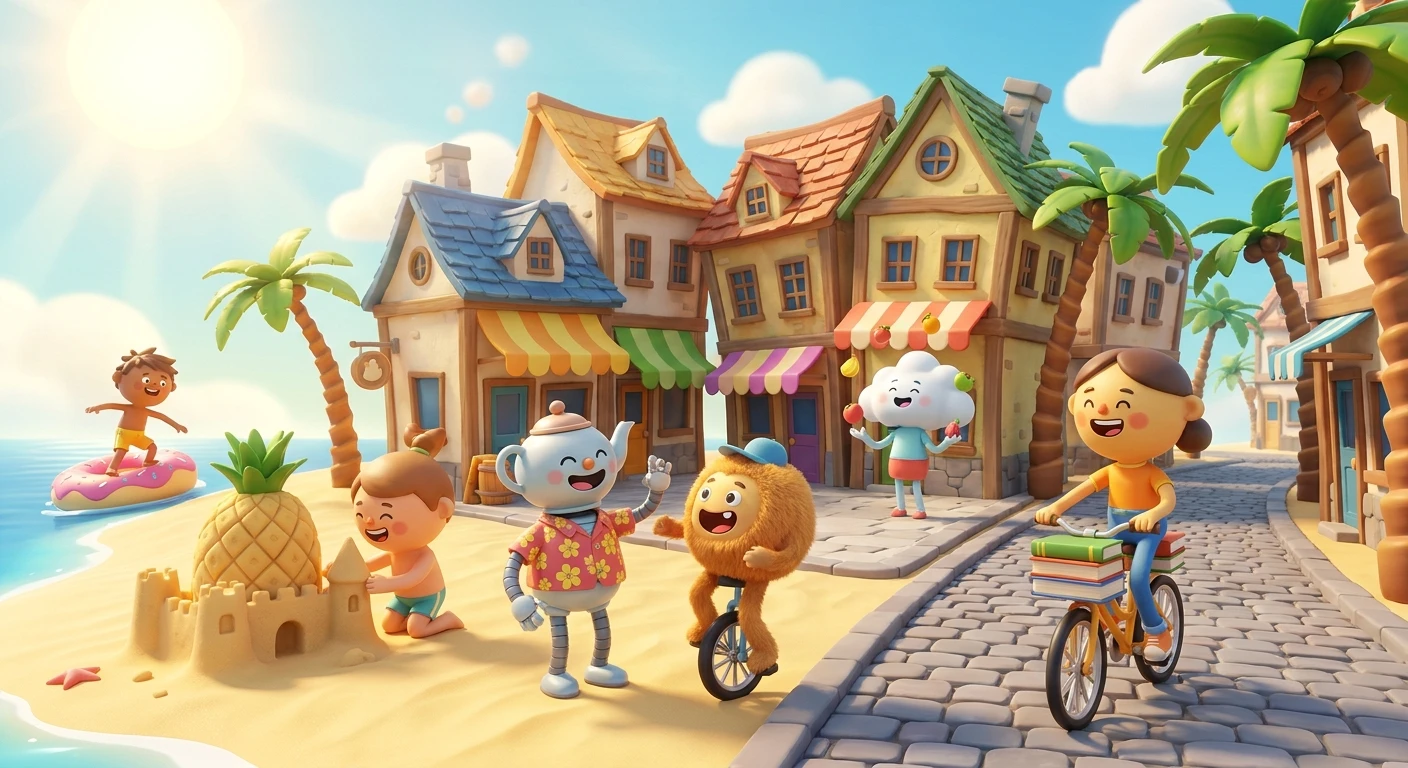
If you have been waiting for the highly anticipated release of Tomodachi Life Switch, you are definitely not alone. Millions of fans have spent years dreaming about bringing their chaotic, personalized Mii apartments to the big screen. The core concept is incredibly simple yet endlessly entertaining: you populate a digital island with characters resembling your friends, family, favorite celebrities, or fictional heroes, and then sit back to watch the unpredictable madness unfold. Sitting here in 2026, the appetite for cozy, bizarre simulators has never been higher. Players are craving games that offer both relaxation and spontaneous comedy, which is exactly where this franchise shines brightest.
The beauty of this quirky simulator lies in its refusal to take itself seriously. Instead of micromanaging every single action like in traditional strategy games, you act as an eccentric landlord and benevolent observer. You feed your residents, buy them clothes, and occasionally offer terrible relationship advice. The thesis is clear: the game represents a massive leap in social simulation, combining bizarre humor with a surprisingly deep web of interpersonal dynamics. It provides a digital ant farm where the ants happen to be your high school teacher and a famous pop star trying to resolve a fight over a teddy bear.
Read also: The Ultimate Guide to tomodachi life; Ultimate Prep Guide for the gta6 release.
Beyond the laughs, the game fosters a unique sense of connection. You get to see personalized avatars react to the absurd situations the game’s engine throws at them. The randomness is the point. Whether they are having surreal dreams about being a piece of toast or engaging in intense rap battles at the fountain, the sheer joy comes from the unexpected outcomes of combining totally unrelated personalities in one confined space.
Understanding the Core Appeal and Mechanics
To truly grasp why this franchise holds such power over its audience, you have to look at the value proposition. The game offers total creative freedom mixed with unscripted comedy. You do not just create an avatar; you define their voice, their personality traits, and their quirks. Two perfect examples of this value in action are the relationship mechanics and the musical performances. You might pair two completely mismatched Miis together, only to watch them go on a hilarious, awkward date at a cafe. Alternatively, you can write custom lyrics for your characters to sing in a heavy metal concert, resulting in endless screenshot opportunities to share with your friends.
When comparing the legacy handheld experience to what a modern console offers, the upgrades become obvious.
| Feature | Legacy 3DS Version | Switch Evolution |
|---|---|---|
| Visual Fidelity | 240p resolution with jagged edges | Full 1080p HD with smooth 3D models |
| Population Cap | Up to 100 residents | Expanded memory for 200+ residents |
| Sharing Capabilities | QR codes and basic screenshot tool | Direct social media video capture integration |
There are several distinct reasons why this specific formula continues to dominate the social simulation genre:
- Total Autonomy: The characters have a mind of their own. They form friendships, hold grudges, and fall in love without your direct input, making the island feel genuinely alive.
- Vocal Synthesis: The robotic, text-to-speech voices add a layer of deadpan humor that elevates every line of dialogue, no matter how mundane.
- Meme Generation: The game is built from the ground up to create shareable, bite-sized moments of comedy that thrive on social media platforms.
History and Origins of the Franchise
The Origins of the Mii Universe
The concept of personalized digital avatars started long before the current hardware generation. Originally introduced alongside the Nintendo Wii in 2006, Miis were designed to give players a customizable identity across multiple games. However, their true potential as independent characters was not realized until 2009 with the release of Tomodachi Collection, a Japan-exclusive title for the Nintendo DS. The developers wanted to see what would happen if these static avatars were given distinct personalities and left to interact with one another in a confined environment. The result was a massive, unexpected hit in Japan, laying the structural groundwork for everything that followed.
Evolution from Handheld to Console
In 2014, the west finally got a taste of the madness with the 3DS sequel. This iteration exploded in popularity thanks to its brilliant marketing and the rise of gaming content creators on YouTube. It utilized the system’s unique features, like the camera and dual screens, to create an intimate, tactile experience. You could physically tap the screen to wake up a sleeping resident or use the microphone to blow on their hot food. The transition from a simple tech demo to a fully fleshed-out digital soap opera was complete, cementing the franchise as a staple of quirky gaming.
The Modern State of Social Simulation
Fast forward to 2026, and the landscape of gaming has shifted dramatically toward high-fidelity graphics and massive open worlds. Yet, the craving for simple, character-driven charm remains intensely strong. The community has kept the spirit of the game alive through emulation, fan art, and social media campaigns, constantly pushing for the Tomodachi Life Switch experience. Modern social simulators often require heavy grinding or daily login commitments, whereas this franchise respects your time, offering bursts of joy whenever you decide to check in on your digital friends.
The Technical Magic Behind the Curtain
The Psychology of Parasocial Mechanics
Underneath the bright colors and silly hats lies a fascinating psychological experiment. The game uses a system called parasocial mapping, which triggers emotional responses by using familiar faces in unfamiliar situations. When you see an avatar of your real-life best friend interacting with an avatar of a historical figure, your brain attempts to reconcile the two realities. The game’s engine uses Finite State Machines (FSM) to dictate behavior. A Mii is essentially a cluster of states (hungry, sad, playful) that transition based on specific triggers (a rejected gift, a successful conversation). This creates an illusion of complex thought and emotion, even though the underlying math is quite rigid.
Voice Synthesis and AI Routines
The hallmark of the experience is the text-to-speech (TTS) engine. Instead of hiring voice actors, the developers utilized synthetic voices that players can tune by adjusting pitch, speed, and intonation. This is not just a stylistic choice; it is a technical necessity to allow players to type in custom catchphrases and song lyrics.
- Pitch and Speed Modifiers: By tweaking audio frequencies, the engine can simulate ages ranging from small children to elderly adults.
- RNG Behavioral Algorithms: Random Number Generation dictates the likelihood of two characters interacting, heavily modified by their assigned personality parameters (e.g., energetic vs. relaxed).
- Dynamic Item Rendering: The game manages hundreds of distinct items, food types, and clothing pieces, loading them dynamically into the scene based on immediate resident requests, keeping memory usage remarkably low.
The Ultimate 7-Day Island Startup Plan
Day 1: Creating Your Lookalike
Your adventure begins by creating your primary avatar, also known as your lookalike. Spend time getting the facial features right, but pay even more attention to the personality sliders. Whether you make them fast-paced and quirky or slow and polite, this initial setup determines how your avatar will interact with everyone else. Move them into the apartment and feed them their first meal to learn their likes and dislikes.
Day 2: Populating the Apartment Complex
An island with one person is boring. On the second day, your mission is to add at least five to ten new residents. Mix it up! Add your family members, your favorite actors, and completely fictional characters. The more diverse the personalities, the better the interactions will be. Scan QR codes online to quickly import popular characters if you lack the patience to build them from scratch.
Day 3: Solving Initial Problems
By day three, your residents will start having problems. Look for the black thought bubbles indicating someone is sad or the green bubbles indicating a game request. Spend this day playing peek-a-boo, guessing the blurred pixel image, and feeding hungry Miis. Every problem you solve earns you money, which is the lifeblood of your island economy.
Day 4: Unlocking the Town Buildings
As you solve problems, the town will begin to expand. Focus on unlocking the Clothing Store, the Hat Shop, and the Supermarket. Buy a variety of items and distribute them to your residents. Watching a tough action hero wander around in a fluffy pink bunny suit is a rite of passage. Make sure you check the daily stock, as the inventory rotates regularly.
Day 5: Managing Relationships and Drama
Pink heart bubbles will begin appearing around day five. This means love is in the air. You will be asked for advice on whether someone should confess their feelings. Encourage them or tell them it is a bad idea. Be prepared for heartbreak; if a confession fails, you will need to spend time cheering up the depressed resident with their favorite foods and new interiors.
Day 6: Concert Hall and Mini-Games
With enough residents leveled up, the Concert Hall will unlock. This is where the game reaches its comedic peak. Form a band with your islanders, choose a genre like techno or opera, and write your own ridiculous lyrics. Spend the rest of the day at the Amusement Park participating in the RPG mini-game or watching the magic show.
Day 7: Expanding the Island Economy
By the end of your first week, you should have a bustling digital society. Focus on collecting treasures at the pawn shop to generate larger sums of cash. Use this money to buy luxury interiors and exotic foods. The more you spoil your residents, the faster they level up, rewarding you with rare items and custom catchphrases that keep the gameplay loop fresh and rewarding.
Separating Myths from Reality
Myth: The game plays itself entirely and there is no actual gameplay.
Reality: While the characters are autonomous, you are the active manager. Without your intervention to feed them, dress them, and resolve their fights, the island’s progress completely halts.
Myth: You need to know the people you add to the island for it to be fun.
Reality: Adding completely random or fictional characters often yields the best results. Watching Dracula become best friends with a pop singer is universally hilarious.
Myth: It is just a clone of Animal Crossing.
Reality: The gameplay loops are entirely different. Animal Crossing is about town decoration, bug catching, and debt repayment. This game is a passive, voyeuristic sitcom generator centered entirely on character relationships.
Myth: There is an ending to the game.
Reality: The simulation runs infinitely. As long as you keep checking in, the characters will continue to age, have children, and create new dramatic situations.
Frequently Asked Questions
Can I import my old 3DS Miis?
Depending on the hardware integration, you can usually transfer older avatars using amiibo data or specialized companion apps linked to your main Nintendo account.
Is there online multiplayer?
The franchise typically relies on passive multiplayer, such as exchanging traveler characters and custom goods via asynchronous internet connections rather than live co-op.
Will there be DLC or expansions?
Historically, the series relied on SpotPass for regular free item distributions, but modern entries could easily support seasonal updates and paid expansion packs for new locations.
Are same-sex relationships supported?
Following massive fan feedback from previous iterations, modern social simulators almost universally include inclusive relationship options, allowing any two characters to pair up.
Can you control the Miis directly?
No, you cannot walk them around with an analog stick. You interact via a god-game interface, tapping objects and selecting dialogue choices from menus.
What is the maximum island population?
While legacy versions capped out at 100 residents, a modern hardware environment easily supports double that amount, giving you vastly more room for custom characters.
Is there a sequel officially planned?
The gaming community remains incredibly vocal about their desire for it, making it one of the most highly requested revivals in the publisher’s extensive catalog.
Ultimately, the magic of Tomodachi Life Switch lies in its effortless charm and unpredictable nature. It asks very little of you but rewards you with countless hours of personalized entertainment. Whether you want to orchestrate a dramatic love triangle or just want to see your avatar perform a heavy metal solo in a hot dog costume, the island is yours to shape. Don’t wait on the sidelines—start planning your ultimate island roster today and prepare for the ultimate social simulation experience!




Leave a Reply