

Honest Ghost of Tsushima Review: Is It Worth Your Time?
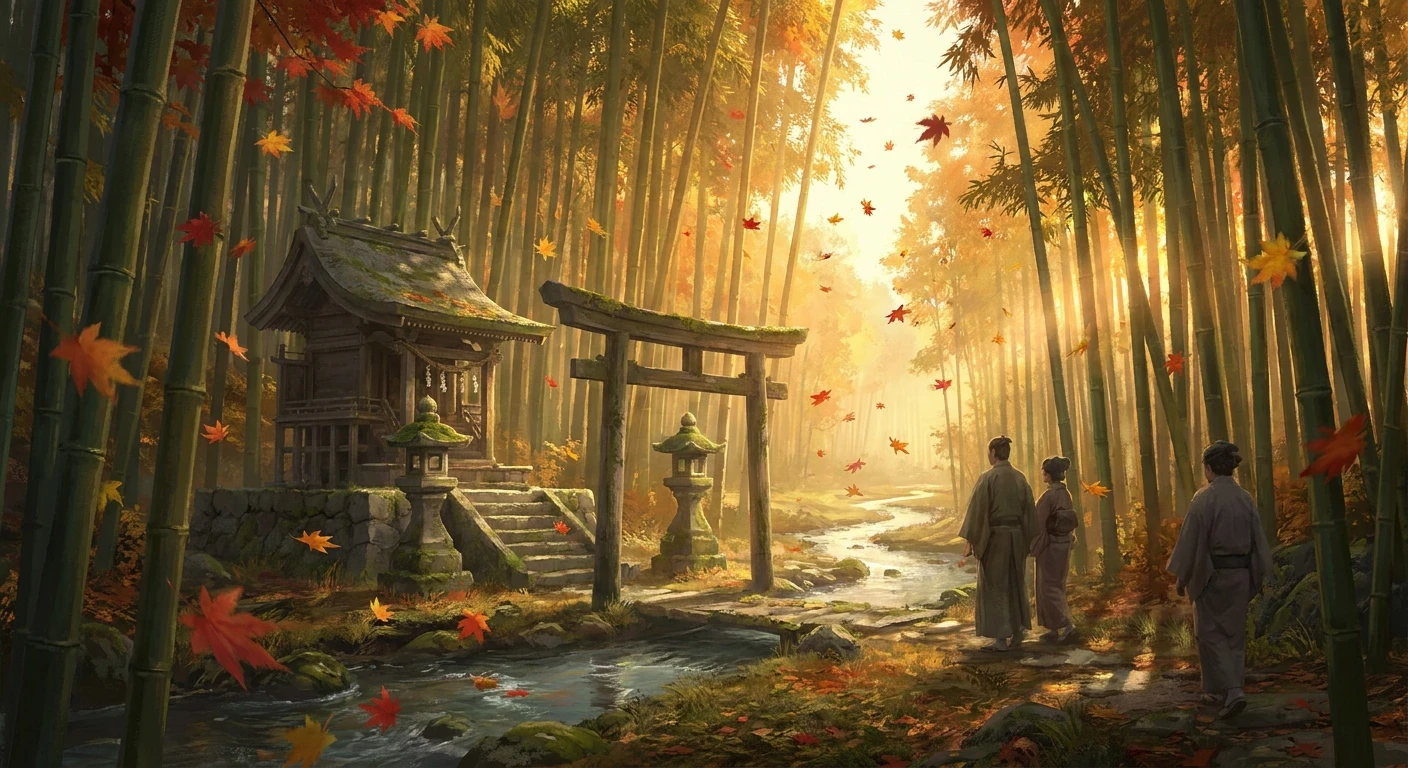
Listen, if you have been waiting for a completely unfiltered ghost of tsushima review, you are in the exact right place. Let me tell you a quick story about how I first truly experienced this game. I was sitting in my apartment in Kyiv during one of the routine winter blackouts. The entire neighborhood was pitch black. The only thing humming in my room was a portable EcoFlow battery keeping my console and monitor alive. While the city outside was freezing and dark, my screen was bursting with the golden, wind-swept pampas grass of Tsushima island. Oddly enough, riding a horse through those endless yellow fields felt incredibly similar to driving past the massive wheat fields in rural Ukraine. It brought this profound sense of peace right when I needed it most.
That is the magic of Jin Sakai’s journey. It is not just another open-world checklist; it is an atmosphere you genuinely want to live inside. We are going to break down exactly what makes this samurai epic tick, why the combat loop feels so ridiculously satisfying, and how you should approach your first playthrough without feeling overwhelmed. Stick around, because I am giving you the straight facts, the best tactics, and absolutely zero fluff.
The Core Experience: Why the Gameplay Loop Actually Respects You
Look, I play a lot of games where you just stare at a minimap in the corner of your screen for eighty hours. You end up not even looking at the world the developers spent years building. The biggest value proposition of Tsushima is how it completely strips away that UI clutter. For example, instead of a glowing dotted line on the ground, you literally just follow the wind. You swipe the touchpad, the trees sway, the grass bends, and you ride in that direction. Another prime example is the organic discovery system. You don’t just chase icons; you see a plume of black smoke over the horizon, or a golden bird flutters past your shoulder, naturally guiding you to a hidden hot spring or a forgotten shrine.
The combat is where things get seriously addictive. It relies heavily on a stance-switching mechanic that feels like a rhythmic dance. You cannot just mash the attack button and expect to survive. You have to adapt constantly on the fly depending on who is charging at you.
| Stance Name | Ideal Target Enemy | Key Mechanical Advantage |
|---|---|---|
| Stone Stance | Swordsmen | Heavy piercing strikes that quickly break standard guard. |
| Water Stance | Shieldmen | Flowing multi-strike combos that shatter defensive blocks. |
| Wind Stance | Spearmen | Auto-parry mechanics during heavy attacks against polearms. |
| Moon Stance | Brutes | Spinning kicks that stagger massive enemies with unblockable attacks. |
Beyond the stances, there are three main reasons why the open-world formula here does not feel exhausting:
- The Loading Times Are Witchcraft: Even fast-traveling across the entire map takes barely a few seconds. It keeps you engaged in the action without scrolling your phone while waiting.
- Meaningful Side Quests: The “Tales” are not fetch quests. They are deeply personal, tragic, and well-written stories about regular people trying to survive a brutal invasion.
- Rewarding Customization: Finding cosmetics actually feels great because they are not locked behind a premium store. You earn your cool hats and armor dyes by exploring and surviving.
The Origins of Tsushima at Sucker Punch
Let’s talk about where this masterpiece actually came from. Sucker Punch Productions was mostly known for the Infamous series—running around Seattle shooting neon lasers out of your hands. Pitching a grounded, historical samurai game with zero magic or superpowers was a massive risk for the studio. They went all in. The developers actually traveled to the real island of Tsushima, recorded the native bird sounds, scanned the local flora, and studied the exact way the sunlight hits the ground during different times of the day. They essentially bet the entire studio’s reputation on nailing the samurai cinema aesthetic, and it paid off immensely.
The Evolution of the Director’s Cut
When the Director’s Cut dropped, it wasn’t just a lazy graphics patch. Sucker Punch added an entire new region called Iki Island. This wasn’t just more of the same; it was a deeply psychological expansion. On Iki, Jin is forced to confront the haunting memories of his father’s death. The enemies are harder, the shamans introduce a wild new buffing mechanic to the Mongol troops, and yes, you can play a flute to tame wild monkeys. It took everything good about the base game and tightened the screws, adding layers of narrative complexity that made Jin a far more relatable, flawed protagonist.
Modern State: Playing in 2026
Now that we are solidly in 2026, you might be wondering how the game holds up. Honestly? It feels like it could have been released yesterday. The leap to PC a few years back brought ultra-widescreen support and unlocked framerates, which makes the sword fights feel impossibly smooth. The modding community has gone crazy with custom armors and visual tweaks, but even the vanilla game on a modern console or rig looks breathtaking. It proves that strong art direction will always outlive raw texture resolution.
The Technical Marvel of the Wind Engine
You really have to appreciate the custom tech Sucker Punch built to make this game function. They created an in-house engine specifically tailored to handle massive particle systems without melting your hardware. When we say “particle systems,” we are talking about the thousands of individual leaves, flower petals, and embers floating on the screen simultaneously. In most games, rendering that much dynamic debris would drop your frame rate to single digits. Here, the engine uses a highly optimized physics calculation that groups the particles based on the wind’s global direction, meaning the CPU isn’t panicking trying to calculate the trajectory of every single leaf independently.
Audio Design and Cultural Authenticity
The audio engineering is another totally brilliant aspect. The team collaborated closely with Japanese cultural experts and martial artists. They didn’t just use generic sword clashing sound effects; they recorded actual katana blades striking different materials. The spatial audio engine dynamically mixes these sounds based on your environment. If you are fighting in a bamboo forest, the sound of the sword echoes differently than if you are fighting in an open snowy field.
- Dynamic Audio Mixing: The sound of thunder and rain is procedurally generated so that no two storms sound exactly the same.
- Kurosawa Mode Filter: This isn’t just a black-and-white visual toggle. The audio is actually compressed and equalized to mimic 1950s optical sound tracks from classic samurai films.
- Foley Precision: The sound of Jin’s footsteps changes dramatically depending on whether he is wearing straw sandals, heavy armor boots, or running barefoot, across over twenty different surface types.
- Level of Detail (LOD) Streaming: The engine seamlessly streams high-resolution textures right where you are looking, while blurring distant objects beautifully to save memory without breaking immersion.
Day 1: Embrace the Parries
When you first boot up the game, do not treat it like a hack-and-slash. Spend your entire first evening just learning the timing of the parry system. Find a small group of Mongols on the road, block their attacks, and watch their animations. Once you master the perfect parry, the game opens up entirely. It changes from a frantic survival game to a cinematic martial arts dance.
Day 2: Follow the Foxes
On your second day, start tracking down fox dens. Seriously, anytime you see a yellow tree or a little fox hopping around, drop whatever mission you are doing and follow it to an Inari Shrine. Praying at these shrines unlocks extra charm slots on your sword, which are absolutely crucial for building out your stats, getting health back on kills, and increasing your damage output early on.
Day 3: Cleanse the Camps
By day three, you should start hitting the Mongol outposts. This is where you test your stealth mechanics. Try clearing an entire camp without triggering an alarm. Use the rooftops, crawl under the tents, and use your wind chimes to distract guards. It is incredibly satisfying to slowly dismantle an entire heavily armed camp completely unseen.
Day 4: Hunt the Mythic Tales
Look for the musician in the villages. These guys give you “Mythic Tales,” which are presented with gorgeous ink-wash animation cutscenes. Prioritize the Heavenly Strike tale. It gives you an unblockable, lightning-fast sword strike that costs resolve but will absolutely save your life when you are backed into a corner by heavy brutes.
Day 5: Upgrade the Katana
Spend this day farming materials. Pick up every piece of iron, steel, and gold you can find. Take it all to the swordsmith. You want your Sakai Katana to be as lethal as possible before you hit the major story checkpoints. A fully upgraded sword lets you cut down regular enemies in one or two hits, making you feel like the true Ghost.
Day 6: Liberate Izuhara
Before you move to the second act of the game, take the time to finish liberating the first island region, Izuhara. Clearing out the red fog from the map not only gives you a massive sense of accomplishment, but it also rewards you with some of the best early-game armor sets, like the Samurai Clan Armor, which gives you a massive health and defense boost.
Day 7: Duel the Straw Hats
By the end of your first week playing, you will encounter the wandering Straw Hat ronin. These guys are no joke. They are fast, they fake their attacks, and they will punish you for spamming buttons. Use everything you have learned over the week. Match their stances, wait for the opening, and strike. Beating a ronin in a one-on-one duel is easily one of the best feelings in modern gaming.
Myths vs. Reality of Tsushima
Myth: It is just an Assassin’s Creed clone set in Japan.
Reality: While it shares some open-world tropes, Tsushima completely ditches the bloated RPG leveling systems and damage sponges. A sword slash is lethal. The progression is tied to your actual skill and observation, not arbitrary level gating.
Myth: The combat is just mindless button mashing.
Reality: If you button mash against a spearman or a shield brute, you will die in three seconds. The combat requires precise timing, stance management, and crowd control using your ghost weapons like kunai and smoke bombs.
Myth: You need to be a history buff to enjoy the story.
Reality: Not at all. The narrative is heavily fictionalized and focuses purely on human emotion—honor, sacrifice, and the desperation of war. You do not need any prior knowledge of the 13th-century Mongol invasions to be fully invested in Jin’s struggle.
Is the game historically accurate?
No, Sucker Punch intentionally took creative liberties. The armor styles, katana designs, and haiku poetry actually belong to later periods in Japanese history. It is a love letter to samurai cinema, not a strict historical documentary.
How long does it take to beat?
If you focus purely on the main story, you can roll the credits in about 20 to 25 hours. If you want to explore every shrine, hot spring, and side tale, you are easily looking at 60+ hours of gameplay.
Is there a multiplayer mode?
Yes, and it is fantastic. “Ghost of Tsushima: Legends” is a separate co-op mode inspired by Japanese mythology. You and three friends can team up to fight waves of oni and spirits. It is incredibly well-made and completely free if you own the game.
Can I play on PC?
Absolutely. The game finally made its way to PC, and it features unlocked framerates, ultra-wide monitor support, and full dual-sense controller haptic feedback if you plug your PS5 controller into your rig.
What is the max level?
Instead of numbers, your “level” is tied to your Legend meter. As you complete quests, your legend grows, unlocking new Ghost weapons and health boosts. The maximum title you reach is “The Ghost of Tsushima.”
Do I need the Director’s Cut?
Yes, highly recommended. The Iki Island expansion adds about 10 hours of incredible story content, new enemies, and deeply emotional background lore for the main character. It is the definitive way to play.
Are there multiple endings?
Yes. At the very end of the game, you are presented with a massive emotional choice. Both endings are beautifully written and heavily impact the final cutscene and the dye color of your armor in the post-game.
Is it difficult for casual gamers?
Not at all. The game has an incredible range of difficulty settings, including an easy mode that makes the parry windows very forgiving, letting you just enjoy the story and the scenery without frustration.
What makes the graphics so special?
It is all about color theory and motion. Instead of realistic drab browns, the game uses hyper-vibrant colors—blood-red maple leaves, pure white snow, golden fields. Everything is constantly moving with the wind, making the static world feel alive.
At the end of the day, there is a reason people still cannot stop talking about this title. It is rare to find an adventure that perfectly balances brutal combat with quiet, meditative moments of writing haikus by a waterfall. If you haven’t played it yet, you owe it to yourself to experience it. Send this guide to your gaming buddies, grab your katana, and go save the island.





Leave a Reply