

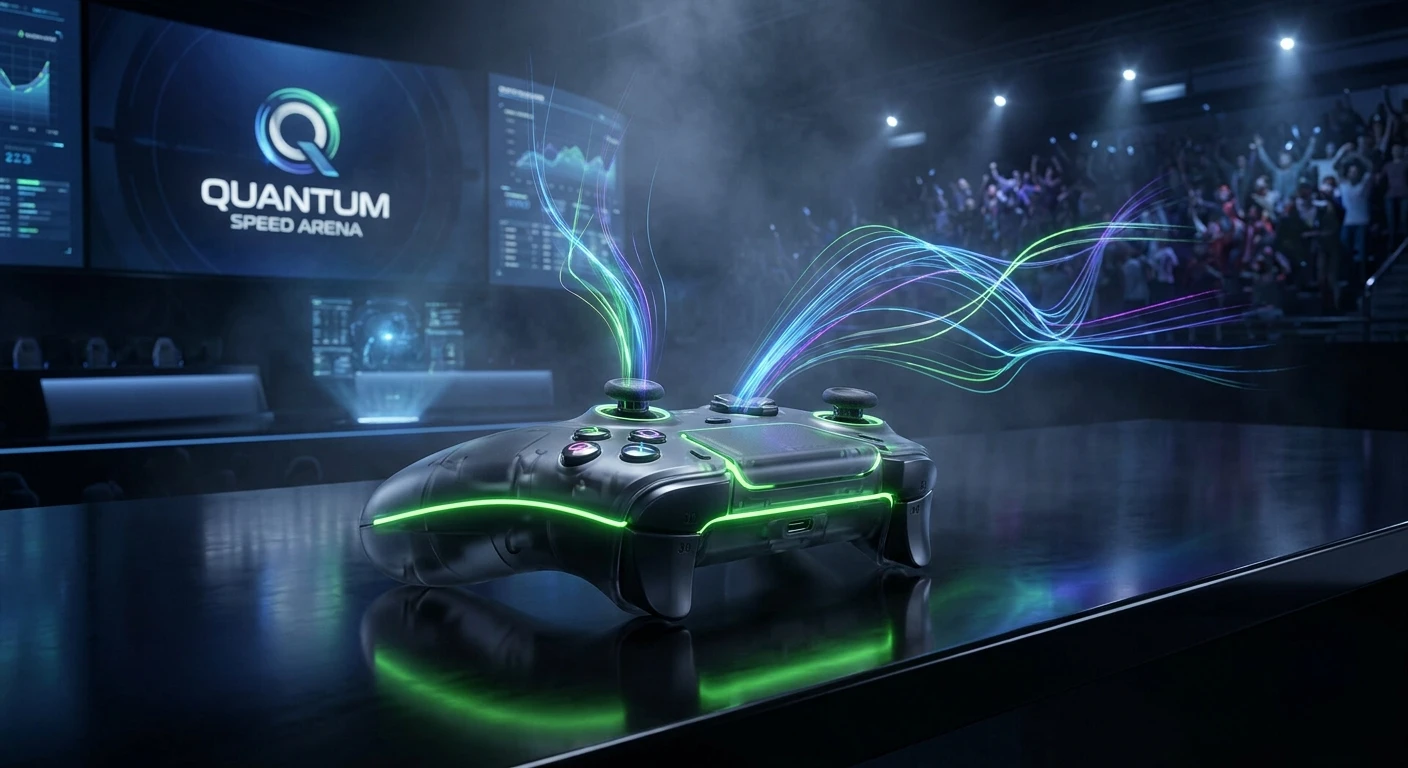
Mastering the razer wolverine v2 pro for Competitive Play
Look, if you want absolute precision and lightning-fast reflexes, you need to talk about the razer wolverine v2 pro right now. Finding a piece of hardware that genuinely shifts your skill ceiling is rare. Most peripherals just add a bit of flash or some extra RGB lighting without really changing how you execute a perfectly timed dodge or a quick-scope across the map. But getting your hands on a premium gamepad completely shifts the paradigm of console and PC competition. I still remember sitting in a dimly lit apartment in Kyiv, right in the middle of those frustrating rolling blackouts a couple of years back. My friend brought over his brand new setup running off a massive power bank just so we could keep our competitive ranks from decaying. He handed me his controller, and the moment I felt the distinct, mouse-like click of those face buttons, everything clicked. It felt completely different from the mushy standard pads I grew up with.
That specific night proved to me that high-quality gear isn’t just marketing hype. The tactile feedback alone gave me a sense of certainty I lacked before. Every input was immediate, crisp, and undeniably accurate. This isn’t just about looking cool on a Twitch stream; it revolves completely around acquiring an undeniable hardware advantage. By securing a pad built for elite performance, you eliminate the hardware bottleneck holding back your raw reaction time. We are going to break down exactly how this specific device gives you the edge you desperately need to climb the leaderboards and outplay opponents who are still stuck relying on basic, outdated setups.
Why Upgrading Your Hardware Changes Everything
Let me tell you, upgrading to professional-grade equipment reshapes your entire gaming experience. The core benefit of moving away from standard equipment lies in raw customization and speed. For instance, when you are playing a fast-paced battle royale, taking your thumbs off the analog sticks to press a face button can literally cost you the match. The extra remappable bumpers and triggers located on the back of a premium device mean you can jump, slide, and reload while keeping your aim completely locked on the enemy. That alone is a massive value proposition. Another prime example is fighting games. Executing complex combos requires flawless directional inputs and immediate button actuation. Standard membrane buttons feel too soft, causing missed frames, whereas mechanical switches register the exact millisecond you apply pressure.
Here is a quick breakdown of how standard controllers stack up against high-end alternatives:
| Feature | Standard Gamepad | Mid-Tier Pro Pad | Elite Grade (Like Wolverine V2 Pro) |
|---|---|---|---|
| Switch Type | Standard Membrane | Enhanced Membrane | Mecha-Tactile Mechanical |
| Wireless Speed | Basic Bluetooth | Bluetooth / 2.4GHz | Ultra-Fast HyperSpeed 2.4GHz |
| Customization | None | Basic Remapping | Full App Integration & Extra Bumpers |
| Trigger Stops | Not Available | Manual Switch | HyperTrigger Technology |
Setting up your high-end gear for maximum efficiency requires a specific approach. Honestly, you can’t just plug it in and expect magic. Here is exactly how to do it:
- First, download the dedicated mobile configuration app and pair it with your device to access the deep mapping profiles.
- Second, assign your most frequently used face buttons (like jump or crouch) to the rear paddles so your thumbs never leave the joysticks.
- Third, manually adjust the trigger stop switches on the back for your shooter games, ensuring you have the absolute shortest pull distance possible to fire faster.
The Origins of Pro Gaming Gear
The concept of professional gamepads didn’t just appear overnight. Honestly, if you look back at the early days of console tournaments, players were modifying standard controllers in their garages. They would physically melt plastic or drill holes to add custom buttons because the market simply did not offer any alternatives. People realized early on that the standard layout, designed for casual living room play, was fundamentally flawed for high-stakes competition. Tournaments demanded more inputs and faster response times, creating a massive vacuum in the hardware industry.
The Evolution of Razer Controllers
As esports began to explode in popularity, companies finally started paying attention to the demands of hardcore competitors. Early iterations of customized tournament pads were incredibly bulky and often required a wired connection to guarantee zero latency. Wires were annoying, but wireless technology back then was simply too slow and unreliable for professional use. The evolution moved from basic shell modifications to entirely new motherboards designed specifically to reduce input delay. Every generation brought something new to the table, from interchangeable thumbsticks to advanced software that allowed players to tune their deadzones with microscopic precision.
The Modern State of Esport Peripherals
Fast forward to now, and the landscape is virtually unrecognizable compared to a decade ago. We now have devices that merge the mechanical precision of high-end gaming keyboards with the ergonomic comfort of traditional gamepads. The current standard demands completely lag-free wireless protocols, mechanical switches that provide audible clicks, and fully modular components. Professional players expect their hardware to adapt to their playstyle, rather than the other way around. The sheer level of engineering placed into the ergonomics and internal circuitry of a modern premium pad rivals the complexity of some smartphones.
The Engineering Behind Mecha-Tactile Switches
Let me get straight to the technical mechanics that make this tier of hardware so impressive. The secret sauce usually lies in the microswitches. Standard controllers use conductive rubber domes. When you press down, you have to squash that rubber until it makes contact with the board. It feels mushy and takes time. Mecha-tactile technology completely replaces that rubber with a physical mechanical switch, very similar to what you find in a premium gaming mouse. This creates an immediate, crisp actuation. You feel a distinct click, and the signal is sent instantly. It requires significantly less force and travels a fraction of the distance, giving you a massive speed advantage over opponents mashing rubber domes.
Decoding Ultra-Fast Wireless Technology
Wireless delay used to be the ultimate dealbreaker for pros. Now, proprietary 2.4GHz connections have completely solved that issue. By using a dedicated dongle rather than standard Bluetooth, the controller bypasses the congested frequencies in your room and establishes a direct, high-speed pipeline straight to the console or PC. As of 2026, the polling rates on these elite wireless devices are so incredibly fast that the human brain literally cannot detect the delay. It feels exactly like playing on a wired connection, but without the annoying cable dragging across your desk.
- Actuation Distance: Actuates at just 0.65mm, which is 35% less than average membrane controllers.
- Durability: Rated for over 3 million tap life cycles, ensuring tournament-grade longevity.
- Weight Distribution: Engineered with perfectly balanced internal acoustics and weight to prevent hand fatigue during long grinds.
- Connectivity: Operates on a dedicated 2.4GHz frequency band to entirely eliminate packet loss.
Day 1: Unboxing and Initial Calibration
Getting a new piece of elite hardware means you need a solid plan to master it. On the first day, just focus on the physical feel. Take it out of the box, snap in the wireless dongle, and update the firmware immediately. Don’t jump right into a ranked match. Spend time in a training mode just getting used to the grip and the placement of the extra shoulder bumpers. Your muscle memory will be confused at first, so keep it casual.
Day 2: Mapping the Extra Triggers
Now that you are comfortable holding it, pull up the mobile app. It is time to bind those extra buttons. If you play shooters, map your jump and slide actions to the rear triggers. This is the hardest part of the learning curve because your brain will still desperately want to press the traditional face buttons. Force yourself to only use the back paddles for those actions today.
Day 3: Tuning Deadzones for Precision
Day three is all about the analog sticks. Go into the software and start tweaking the deadzones. A deadzone is the amount you can move the stick before the game registers it. You want this as close to zero as possible without getting stick drift. Test this in a custom lobby by aiming at a stationary target. Adjust the sensitivity curve until your tracking feels buttery smooth.
Day 4: Locking Down the HyperTriggers
Flip the mechanical switches on the back of the controller to activate the trigger stops. This drastically reduces the pull distance of the main left and right triggers. Boot up an FPS game and test firing semi-automatic weapons. You will immediately notice how much faster you can shoot compared to a full trigger pull. Practice rhythmic tapping to maximize your fire rate.
Day 5: Creating Genre-Specific Profiles
You don’t play just one game, so don’t use just one layout. Spend day five creating distinct profiles in the app. Make a specific layout for your favorite racing game with full trigger pulls for gas and brake, and a separate profile for your main battle royale with the trigger stops engaged. Switch between them to ensure the app syncs flawlessly.
Day 6: Endurance Testing and Battery Management
By day six, you should be totally comfortable. Now it is time for a long session. Play for several hours to test how the ergonomics treat your hands. Pay close attention to the battery life. Even with RGB disabled, you want to know exactly how many hours you can get before needing a charge, ensuring it never dies mid-tournament.
Day 7: Tournament Ready Confidence
You have spent a week retraining your hands and perfectly tuning the software. Today, you take it into the ranked playlists. Trust the hardware. You will notice that you are winning more 1v1 gunfights and executing movement mechanics flawlessly. The training period is over, and you are fully equipped to dominate.
Common Misconceptions Debunked
Myth: Pro-level gamepads are completely unnecessary unless you are playing in literal cash tournaments.
Reality: Absolutely false. Even casual players instantly benefit from the ergonomic upgrades and mechanical switches, saving immense hand strain over long casual sessions.
Myth: Wireless controllers will always drop inputs and suffer from noticeable lag during intense moments.
Reality: That was true a decade ago. With dedicated 2.4GHz dongles, the input latency is completely indistinguishable from a hardwired USB connection.
Myth: Having extra buttons makes gaming significantly more complicated and confusing.
Reality: While it takes a few days to build muscle memory, the extra buttons actually simplify gameplay by allowing you to keep your thumbs firmly planted on the aiming sticks at all times.
Does it work perfectly on a PC?
Yes, it functions flawlessly on PC. You just plug in the dongle, and Windows recognizes it immediately, giving you full access to all the elite features.
How long does the battery actually last?
If you turn off the heavy RGB lighting, you can easily push past 20 hours of continuous elite-level gameplay before needing to plug it into a charging cable.
Can I swap out the thumbsticks?
Yes, premium pads generally come with extra magnetic thumbsticks in the box. You can swap between taller sticks for sniper precision or shorter convex sticks for aggressive, fast movements.
Are the mechanical buttons really that loud?
They provide a satisfying, audible mouse-like click, but they aren’t completely obnoxious. If you use a headset, you won’t hear them, but you will definitely feel that crisp actuation.
Do I need a PC to configure the settings?
Not at all. You can configure absolutely everything via a dedicated mobile app via Bluetooth, making on-the-fly adjustments incredibly simple while sitting on your couch.
Will using this automatically make me a professional?
It won’t give you game sense or map knowledge, but it will absolutely remove the mechanical hardware barriers that are currently causing you to lose split-second gunfights.
Is the D-Pad good for traditional fighting games?
The 8-way microswitch D-pad is incredibly accurate. It registers diagonal inputs perfectly, making complex fireball motions and fighting game combos vastly easier to execute.
Wrapping things up, if you are serious about winning, leaving your hardware up to chance makes zero sense. Elevating your setup with top-tier gear completely changes how you interact with your favorite titles. The crisp mechanical inputs, zero-lag wireless, and complete layout customization give you an unparalleled edge over the competition. Stop relying on mushy buttons and restrictive default layouts. Grab a premium competitive controller today, start your 7-day retraining plan, and absolutely dominate your next ranked session!





Leave a Reply