

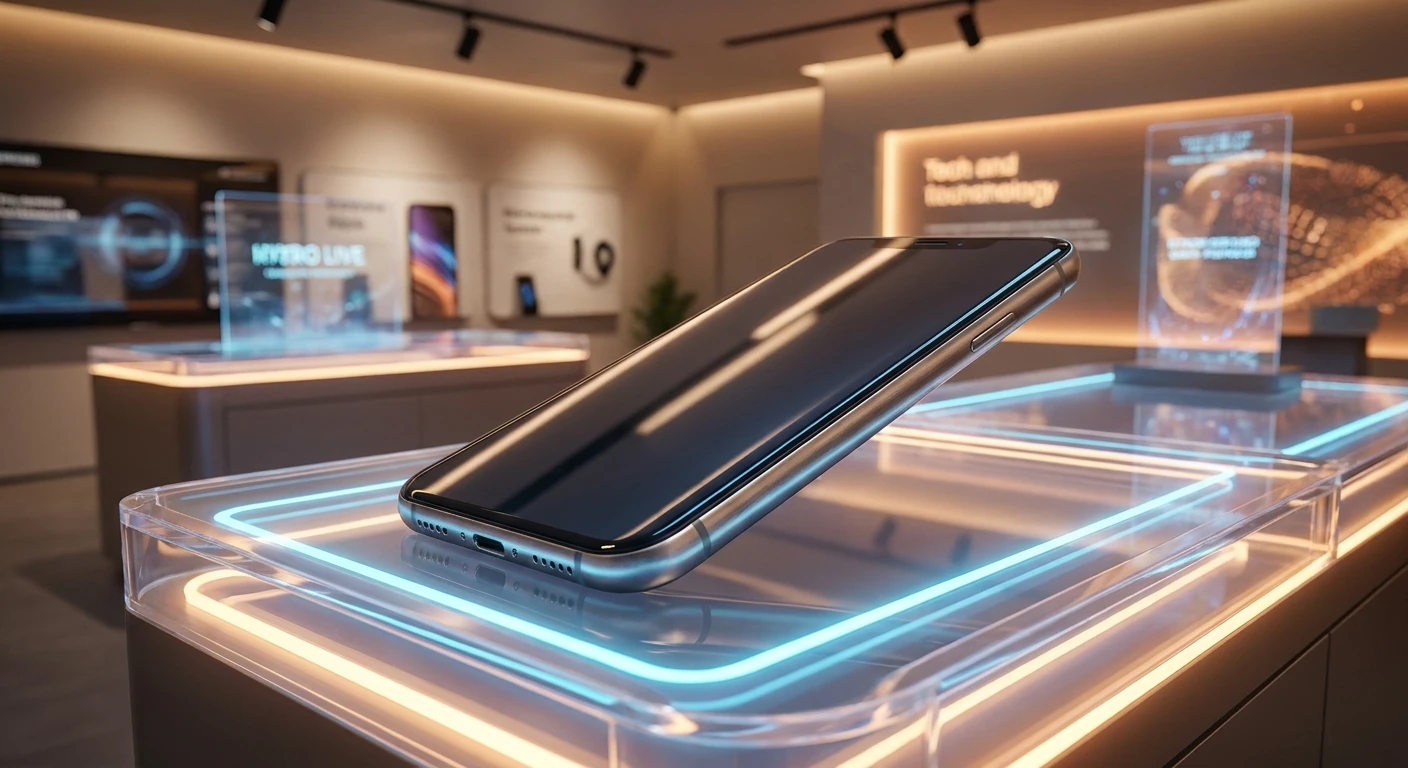
Getting the Best Value From a JB Hi Fi Trade In Phone
Thinking about upgrading and wondering if a JB Hi Fi trade in phone is the smartest route? You are definitely not alone. Look, we all have that infamous drawer of doom at home, filled with tangled cables and retired gadgets gathering dust. But letting a perfectly functional smartphone sit in the dark is basically leaving money on the table. Tech prices are climbing, and flagship devices routinely push past the thousand-dollar mark, making any financial offset incredibly welcome. Taking your old mobile into a major retail hub offers a straightforward way to knock a significant chunk off your next purchase. Instead of dealing with the endless headaches of online marketplaces—dodgy buyers, lowball offers, and shipping risks—you get immediate, tangible store credit. It is a seamless exchange designed for tech lovers who want their new gear right now without the hassle. We are going to explore exactly how the valuation process works, what hardware checks take place behind the scenes, and how you can prepare your device to ensure you get the absolute highest offer possible before you walk up to the counter.
The Core Benefits and Mechanics of Retail Swaps
The primary advantage of opting for a retail exchange is absolute friction-less convenience combined with immediate purchasing power. When you commit to the process, you bypass the notoriously frustrating peer-to-peer selling market. There is no haggling, no waiting for a bank transfer to clear, and zero risk of getting scammed. You simply hand over your hardware, receive a quote based on live market metrics, and apply that value directly to a brand new television, gaming console, or a freshly released smartphone. This value proposition becomes incredibly attractive when you consider the sheer variety of products available in a massive retail ecosystem. For example, you might hand over a two-year-old smartphone and use the credit to entirely fund a new set of premium noise-cancelling headphones. Alternatively, you could trade in a tablet you no longer use to significantly discount a heavy-duty laptop for work.
Read also: Current iPhone 12 Price in Australia: Market Guide; Current Samsung S20 Ultra Price Analysis and Tips.
| Device Type | Typical Condition Assessment | Estimated Value Tier |
|---|---|---|
| Flagship Smartphone (1-2 years old) | Flawless screen, high battery health capacity | Premium (High Store Credit) |
| Mid-Range Device (2-3 years old) | Minor cosmetic scuffs, average battery wear | Standard (Moderate Store Credit) |
| Older Generation Gadget (4+ years old) | Significant physical wear, fully functional hardware | Base (Entry-Level Credit) |
Understanding the actual workflow takes the mystery out of the transaction. The mechanics are highly standardized to ensure fairness and speed. Here is exactly what happens when you approach the service desk:
- Initial Physical Assessment: A staff member conducts a visual inspection of your charged device to evaluate the cosmetic condition, checking for deep scratches, structural bends, or liquid damage indicators.
- System Diagnostics: A software scan or manual check verifies battery health, internal storage integrity, and ensures all activation locks and personal accounts have been successfully removed.
- Quote and Credit Fulfillment: Based on a live database of secondary market values, you receive an immediate, no-obligation offer. If you accept, the amount is instantly issued as store credit.
The History and Origins of Retail Device Swaps
The Origins of Retail Device Trade-Ins
If we look back a decade ago, the concept of trading electronics at a general electronics store was virtually non-existent. Consumers were locked into rigid carrier contracts where the network subsidized the cost of the hardware. When your two years were up, you simply threw the old device in a drawer and signed a new piece of paper for a fresh one. However, as carrier subsidies slowly vanished and consumers were forced to pay full retail price for unlocked hardware, the financial shock was immense. People suddenly needed a way to extract residual value from their aging tech to afford the newest models. Specialized online recyclers popped up first, but they required mailing your fragile electronics away and waiting weeks for a cheque. The demand for instant, face-to-face gratification drove massive brick-and-mortar stores to step in.
The Evolution of Store-Level Processing
Early retail iterations were clunky. Store clerks had to manually look up device prices in massive, frequently outdated binders or slow intranet portals. Offers were often wildly inconsistent, relying heavily on the individual clerk’s subjective opinion of what a scratch looked like. Over time, the integration of advanced diagnostic software transformed the landscape. By partnering with massive third-party refurbishment networks, retail chains could offer standardized, algorithmic pricing based on the device’s International Mobile Equipment Identity (IMEI). This evolution meant that a JB Hi Fi trade in phone experience became uniform, lightning-fast, and deeply integrated into the point-of-sale system, allowing customers to upgrade on a whim during a Sunday shopping trip.
Modern State of Circular Electronics
Today, the secondary tech market is a multi-billion dollar global industry driven by a desperate need for environmental sustainability. Electronics retail is no longer a one-way street; it is a circular economy. When you hand over a device, it does not just sit in a backroom. It is rapidly shipped to industrial refurbishment centers where it is wiped to military standards, repaired with OEM parts, and injected back into the market as a certified refurbished unit. Devices that are too far gone are mechanically shredded to harvest rare earth metals. This modern state of affairs means your trade-in is actively reducing the global e-waste footprint, lowering the demand for environmentally destructive mining operations.
Scientific and Technical Deep Dive
Diagnostic Software and Hardware Scanning
When your device is evaluated, it is subjected to a surprisingly sophisticated technical analysis. Evaluators look far beyond a shiny screen. They are checking the chemical degradation of your lithium-ion battery. Every time you charge and deplete a battery, its chemical structure breaks down slightly, reducing its maximum capacity. Diagnostic tools read the internal cycle count to determine if the battery requires a costly replacement before the phone can be resold. Additionally, the touch digitizer is tested for dead zones, the camera modules are checked for optical image stabilization (OIS) failure, and the internal storage sectors are scanned for read/write fatigue. These hardware metrics dictate whether a device is classified as Grade A (ready for resale) or Grade C (requiring heavy refurbishment).
Data Erasure and Factory Reset Protocols
Security is the most critical technical hurdle. A simple manual deletion of photos does not actually remove the binary data from a solid-state drive; it merely tells the operating system that the space is available to be overwritten. Modern smartphones utilize hardware-level encryption. When you perform a proper factory reset, the device deletes the cryptographic key required to decipher your data, instantly rendering all personal files unreadable, even to advanced forensic recovery tools. Furthermore, Factory Reset Protection (FRP) and iCloud Activation Locks are tied to the device’s unique motherboard signature on external servers. If these are not severed before the handover, the device is functionally a brick and cannot be traded.
- Lithium-ion degradation: Chemical aging reduces charge capacity, which is a primary metric in secondary market valuations because replacements are expensive.
- Solid-state storage health: Worn flash memory sectors can indicate a device nearing the end of its reliable lifespan, impacting its grade.
- Cryptographic shredding: Modern resets destroy the encryption keys, ensuring your personal data cannot be recovered by future owners.
- Rare earth recovery: Devices bypassing the secondary market contain highly valuable and recoverable gold, copper, and cobalt that mitigate mining impacts.
Practical Takeaways for Maximum Value
Securing Personal Data Before Handover
Never walk up to a retail counter without completely securing your digital life first. Start by forcing a comprehensive cloud backup of your photos, contacts, and app data over a stable Wi-Fi connection. Once verified, manually sign out of all primary accounts—this means logging out of your Apple ID or Google Account. This step is non-negotiable because it disables the anti-theft activation locks. Finally, trigger the full system factory data reset. Wait for the phone to reboot to the initial welcome screen. This guarantees your financial apps, intimate photos, and browser histories are cryptographically destroyed and the hardware is ready for immediate assessment.
Physical Cleaning and Presentation Details
First impressions matter, even to algorithmic grading software. A device caked in pocket lint and finger grease looks neglected, which can subconsciously influence the cosmetic grading. Take a microfiber cloth and gently wipe down the front and back glass. Use a wooden or plastic toothpick (never metal, which can short the pins) to carefully extract compacted lint from the USB-C or Lightning charging port. This ensures the diagnostic cables connect instantly without throwing an error code. If you have a cracked glass screen protector, peel it off. A flawless native screen hidden under a shattered protector might mistakenly be graded as a broken display, costing you a massive chunk of your quote.
Strategic Upgrade Timing
Timing your retail visit can dramatically impact the store credit you receive. The secondary market operates on strict supply and demand curves. If you wait until the day after a massive new global smartphone announcement, the market floods with older devices, and trade-in values plummet overnight. The optimal time to execute a swap is typically three to four weeks before a major tech keynote. During this window, your current generation phone retains its peak residual value. Watch the tech news cycles closely. Being proactive rather than reactive ensures your hardware funds a much larger portion of your brand new purchase.
Myths and Reality of Device Swapping
Myth: A cracked screen makes the device totally worthless.
Reality: While a cracked screen significantly impacts the quote because display assemblies are expensive to replace, many newer premium devices still retain residual value. High-end phones with broken glass are often sent for official refurbishment where the logic boards and camera modules are salvaged.
Myth: You get actual cash in hand for your old tech.
Reality: Retail programs are designed to keep money inside their ecosystem. You will almost exclusively receive store credit, gift cards, or a direct discount applied instantly to a new transaction at the register.
Myth: You need the original box and charger to get a quote.
Reality: The secondary market primarily cares about the bare device. While having original accessories was crucial a decade ago, today, the handset itself dictates the value. You can usually keep your old charging bricks.
Myth: Water damaged phones can sneak through the testing phase.
Reality: Every modern phone features Liquid Damage Indicator (LDI) stickers hidden inside the ports or SIM trays that permanently change color when exposed to moisture. Diagnostic checks will immediately flag a water-compromised device.
Frequently Asked Questions
Do they accept older generation devices?
Yes, though the credit offered will accurately reflect the current secondary market demand. A phone that is five years old will yield significantly less than a model released last year.
Can I trade in multiple items at once?
Absolutely. You can often consolidate the residual value of several different devices—like an old tablet, a smartwatch, and a phone—to fund a single, larger purchase like a high-end television.
Is the quoted value guaranteed for later?
The quote is typically only valid for that immediate transaction. If you choose to leave the store and return days later, fluctuating market prices mean your device will need to be re-evaluated.
Do I need to bring the original charger?
Usually, the primary device is all that is strictly required. Retailers know consumers lose cables, so the valuation is based almost entirely on the core hardware.
What if the battery is completely dead?
If the device cannot power on to complete software diagnostics, verify the IMEI, and confirm the removal of activation locks, it generally cannot be traded for monetary value.
Are international models accepted?
Store policies vary, but often only locally certified models are eligible for the maximum value tier due to differing network band compatibility and regional warranty laws.
How is my personal data handled?
You must perform a factory reset before handing it over. If you forget, staff will generally require you to reset it right there at the counter before completing the transaction.
Can I get cash instead of store credit?
Retail trade programs are explicitly designed to provide store credit to be used within their specific retail environment, not to act as a direct cash payout service.
Leveraging a retail exchange is one of the smartest ways to keep your personal tech updated without draining your bank account. By understanding the valuation criteria, meticulously preparing your hardware, and timing the market, you can extract every last dollar of residual value. Grab your old device, back up your irreplaceable photos, wipe the data clean, and head down to see what your JB Hi Fi Trade In Phone is worth today. Your next major upgrade could be significantly cheaper than you ever anticipated.





Leave a Reply